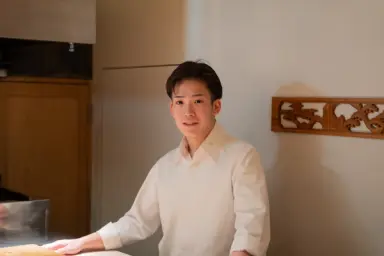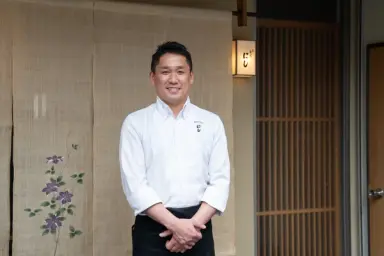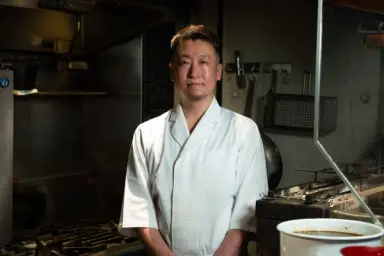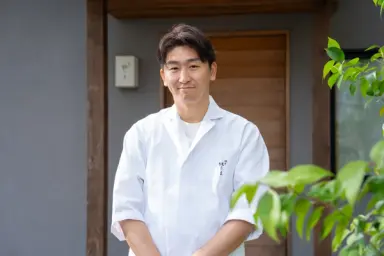

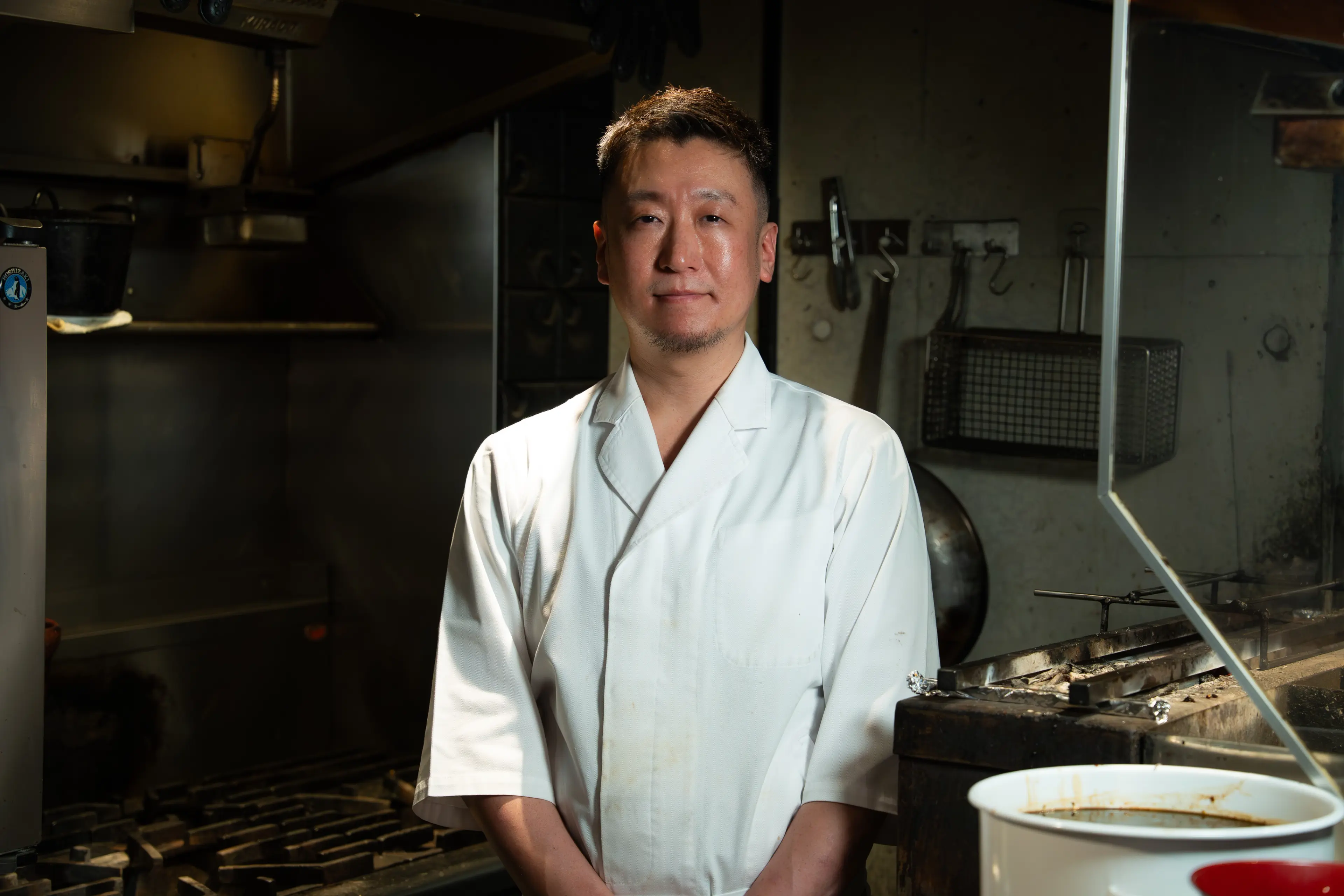
[Tori Takuchan] Takuya Takahashi devotes himself with loyalty, serving carefully crafted yakitori that brings color to the table
"Someday" is "Now" — Switching Careers to Become a Chef
——— What inspired you to become a chef?
My family runs a beauty salon, so I grew up in a setting different from the food and beverage industry, but my mother is a great cook, and by watching and imitating her, I naturally learned how to cook. When I was in elementary school, I would recreate at home the dishes we made in home economics class, and after I was old enough to drink, I started inviting friends over and serving food at home parties. Before long, I found myself thinking, “Someday I’d like to run my own restaurant or café.”
Before I set my sights on becoming a chef, I worked as a nurse, and at that time I didn’t have anything I particularly wanted to do in the future. I’ve always liked taking care of people, so when someone suggested, “Why don’t you try going into nursing?” I gave it a shot, and it turned out to really suit me.
The turning point was the COVID-19 pandemic. Rather than just keep thinking I’d like to do it someday, I made up my mind: “If I want to do it someday, I should do it now.” Around that time, the restaurant where I would later train happened to invite me to come work there, and with that, I decided “If I’m going to do it, now’s the time.” I quit my job as a nurse and set out on the path to becoming a chef.
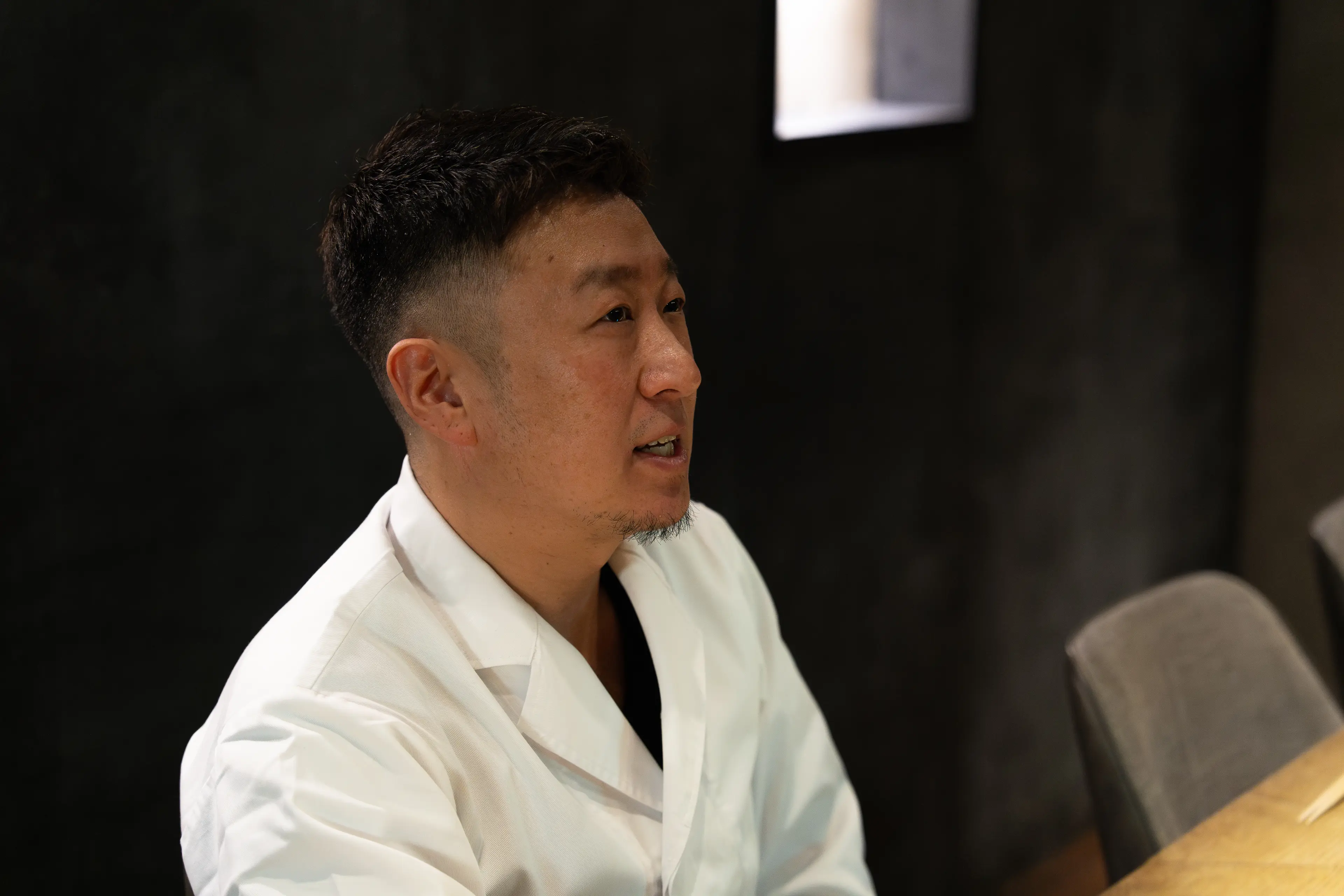
——— Why did you choose yakitori as your specialty?
Yakitori has been familiar to me since I was little. You often see it being sold from a small truck next to the supermarket, right? I always looked forward to eating that, and I’ve liked yakitori since I was a child. Even after I became a nurse, on days without night shifts I often went out to eat yakitori, so it naturally made me think, “If I ever run my own place, it’ll be a yakitori shop.” Of course, I’ve never thought yakitori would be easy (laughs). It’s just that, for me, the closest and most beloved genre of food has always been yakitori.
What It Takes to Be a Chef
——— How did you come across your training restaurant?
When I was working as a nurse, I often visited my future training restaurant as a customer. I had told the staff there that I was a nurse, and through conversations with the proprietress and others, I was asked, when one of their staff members was about to leave, “Would you like to come work here?”
It felt partly like a joke, but I replied, “I’d love to,” and that’s how I ended up working there. If it hadn’t been for that exchange, I might still be working as a nurse today.
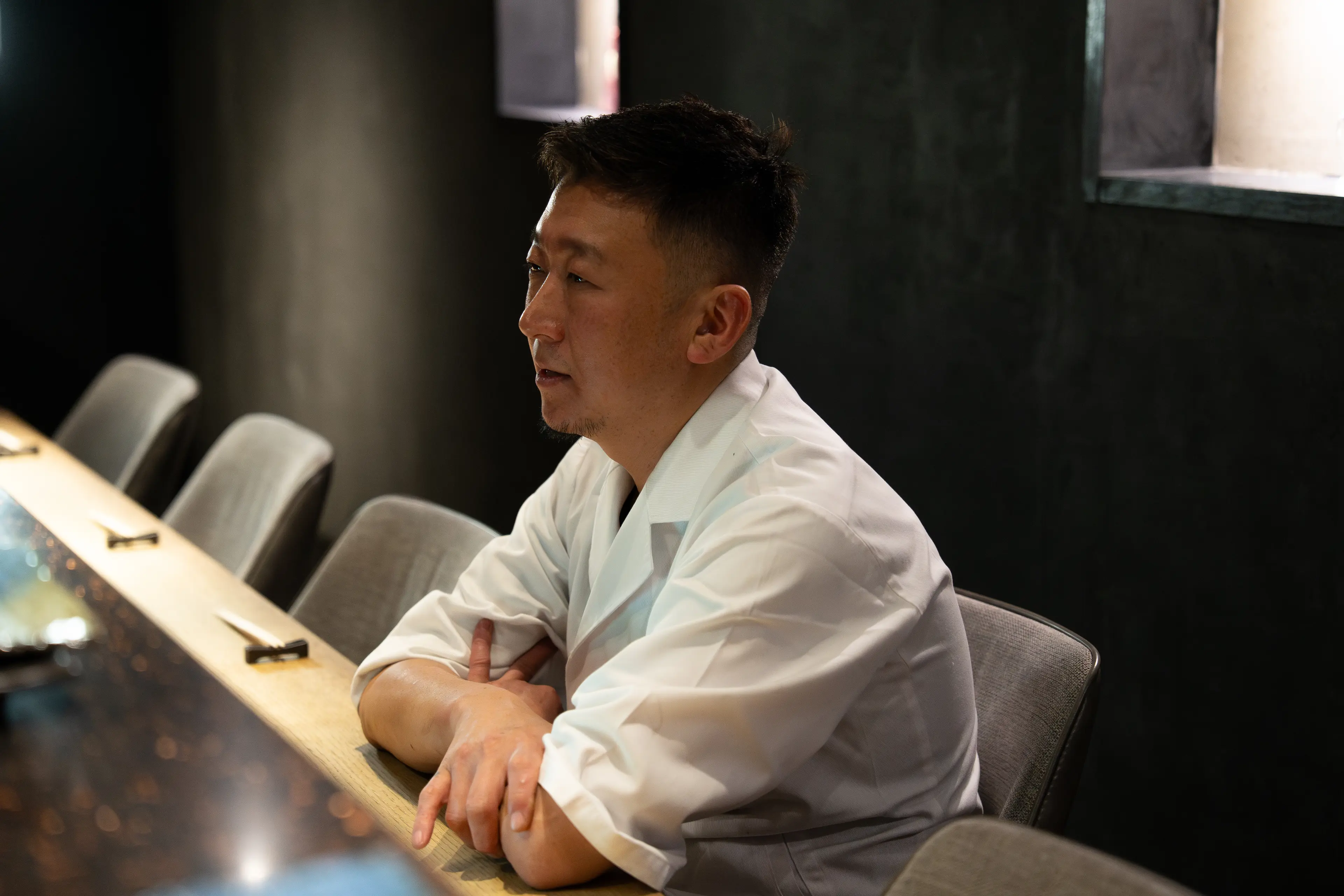
——— After going through your years of training, what have you felt or learned that still benefits you today?
What struck me most when I began my training was the harshness of the culinary world. I had some experience working part-time in the food industry, but the more deeply I became involved, the more I felt that it could be an unforgiving and, at times, unreasonable environment.In the field of nursing, decisions and methods are guided by data and evidence. As long as you have a clear basis, even someone in a junior position can raise objections. In contrast, in the culinary world, there are elements of “meaning” and “sensibility” that cannot be fully explained by logic alone, and I found it challenging that logic does not always apply. At the same time, I came to believe that even within that sense of unreasonableness, there is meaning. Looking back now, I feel that all of it was an essential part of my learning.
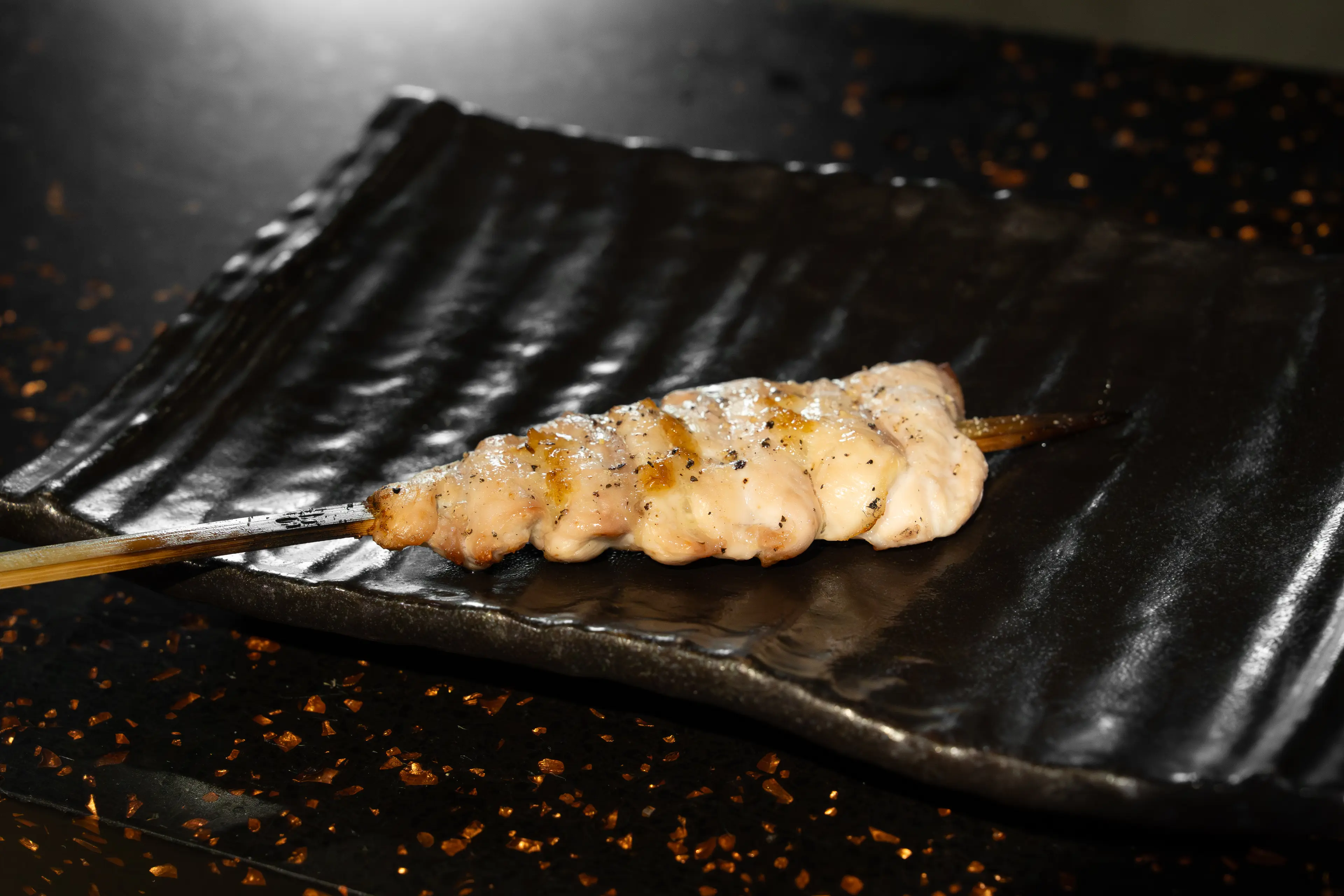
Another important lesson is the need to constantly keep your senses sharp. Even in everyday situations, I’ve developed the habit of observing and thinking, “Is there something here I can apply to my cooking?”
I was taught to “always stay attentive, even when you’re not working,” and I’ve come to realize that maintaining that level of awareness is important in any field. Even now, many of the ideas I incorporate into my cooking are inspired by things outside the world of yakitori.
——— How do you incorporate those ideas into your cooking?
A recent example would be a dish I happened to come across at an Italian restaurant I walked into by chance—something like simmered green peppers. The moment I took a bite, broth burst out from inside, and it inspired me to think, “I wonder if I could adapt this into grilled vegetables at a yakitori restaurant.” The original dish was served cold, but at 【Tori Takuchan】, we created a dish using Manganji peppers, placing them in broth and then grilling them before serving. When we introduced it to our guests, it was very well received and quickly became a popular item. Recreating it turned out to be a great success.
What it means to open a restaurant in the highly competitive Kagurazaka area
——— Could you tell us about any memorable experiences from when you first opened your restaurant?
It’s been almost two years since I opened the business, but at the time I felt, “Now that I’ve changed jobs, there’s no turning back.” When I started looking for a property, I happened to find this place through an acquaintance, just at the right time, as a fully fitted-out space. Before that, there had been a Japanese restaurant here, and although I replaced the dust collector and the ventilation system with more powerful ones, I’ve hardly changed any of the major fixtures.
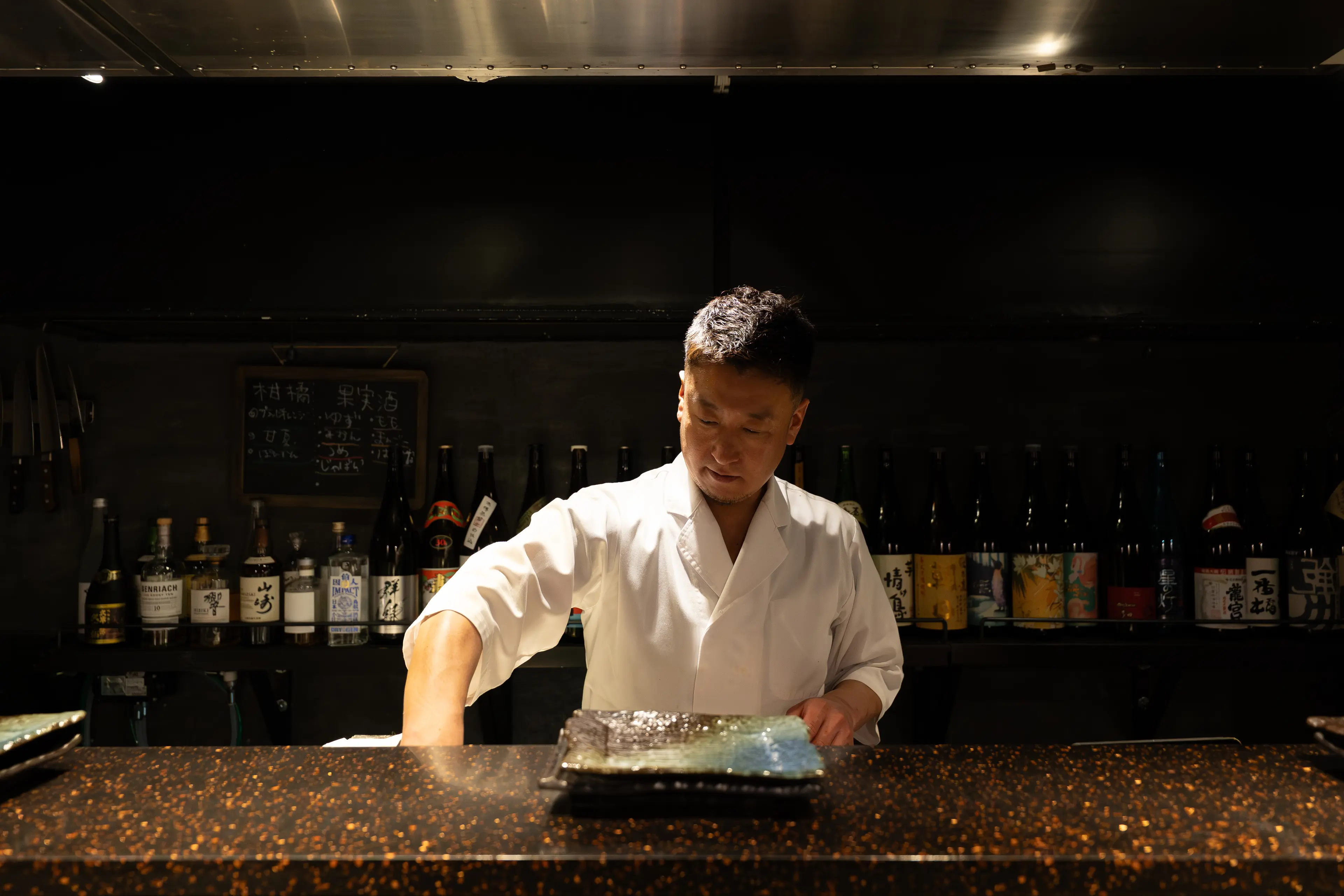
Kagurazaka is a highly competitive area for yakitori restaurants. I felt that if we could survive in this environment, we would be able to sustain the business for the long term.
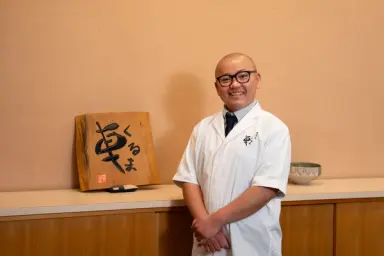
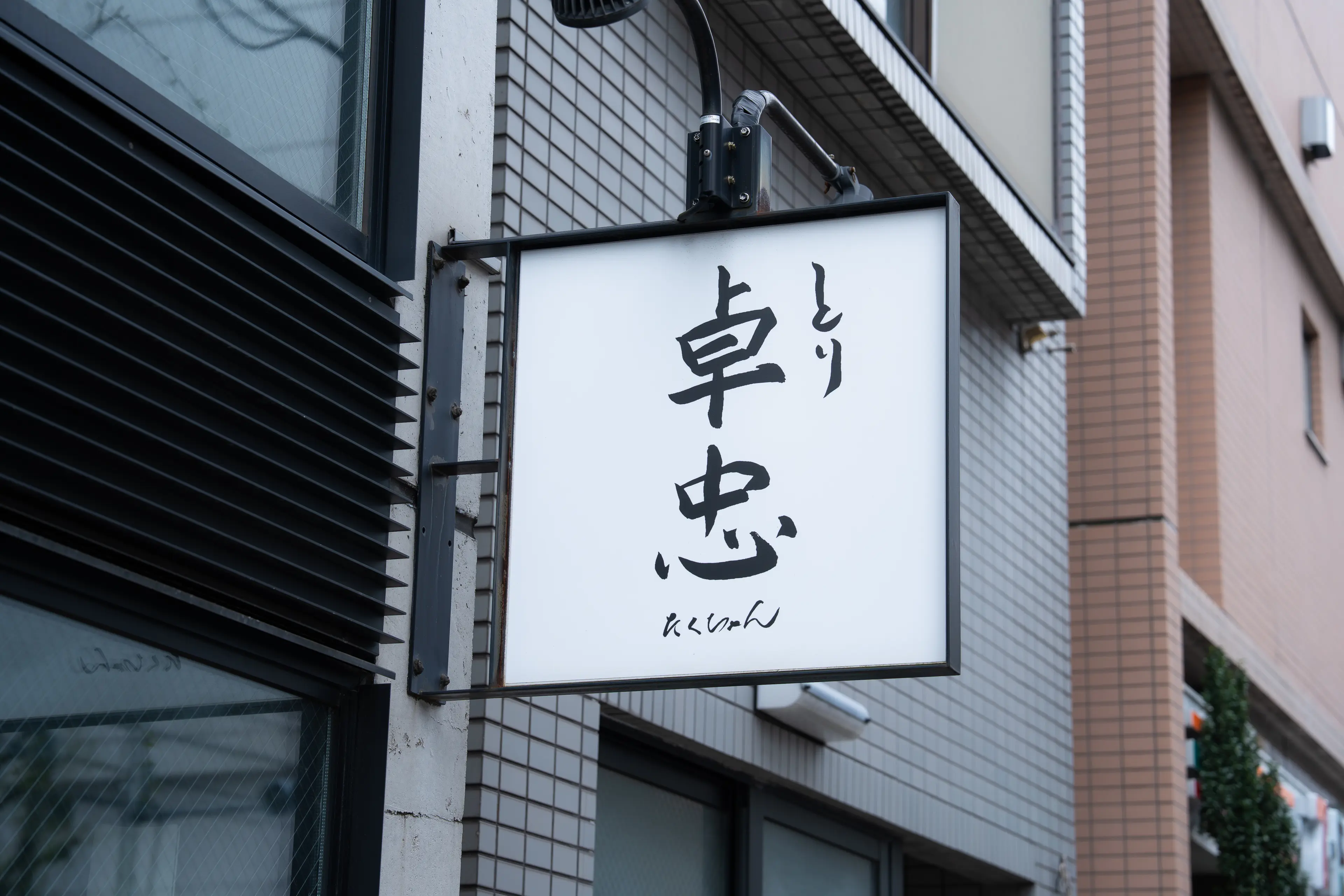
As for the name of the restaurant, my given name “Takuya” was the name my father wanted for me, while my mother had wanted to name me “Tadashi.” I had heard that story, and since I was sometimes called “Taku-chan,” I decided to use the character for “Tadashi” and read it as “chan,” which led to the name 【Tori Takuchan】. Incidentally, the lettering on the sign was written by my mother.
Pursuing the best way to bring out the qualities of the ingredients
——— What do you consider most important when choosing ingredients?
What I value most is bringing out the flavors of the ingredients in a way that enhances their natural qualities. Because our pricing is based on a fixed-course menu with all-you-can-drink included, it’s not always feasible to rely heavily on high-end ingredients. That’s why I believe that even so-called “B-grade” ingredients can be truly delicious if their inherent flavors are properly brought out. That perspective is very important to me.
I also aim to use ingredients that are as close to pesticide-free as possible. While such ingredients often have a more natural, robust flavor, they can also be more delicate and spoil more quickly. Each comes with its own strengths and challenges.
——— Please tell us what you are particularly particular about when it comes to sourcing chickens and other ingredients.
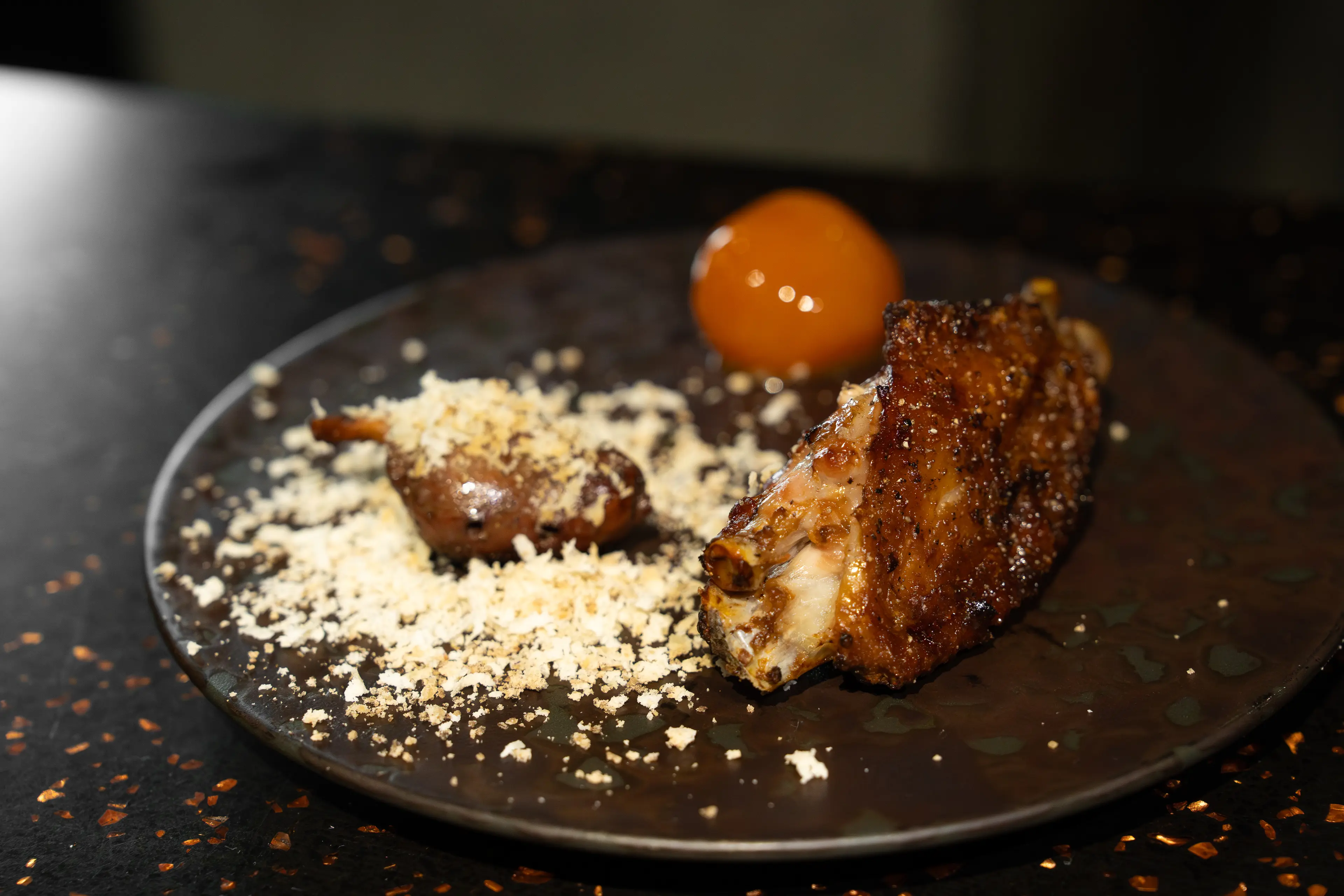
For chicken, we mainly use varieties such as guinea fowl, Tochigi Shamo, and Shinshu Golden Shamo. I was introduced to the supplier of Shinshu Golden Shamo because it was a chicken I had used during my training.
For Tochigi Shamo, I personally developed a direct sourcing route with producers in Tochigi. During my training, I came across it while searching for new types of chicken. When I had some sent to try, it turned out to be exceptionally delicious. At the time, no other yakitori restaurants around me were using it, which made me want to incorporate it even more. The breast meat is particularly outstanding, and depending on the season, the thigh meat also develops a rich flavor.
As for guinea fowl, I sought out producers myself, contacted them directly, and arranged to source from them. At the time, there were no other restaurants using guinea fowl from that particular farm for yakitori.
Whenever I encounter an unfamiliar ingredient, I make it a point to try it first. I believe that mindset is important. During my training, the restaurant actively incorporated a wide variety of new ingredients whenever they were introduced by farmers, and that approach had a strong influence on me. Now, I visit Toyosu Market myself and, through conversations with vendors, continue to discover and source new ingredients.
Not just pleasing the palate, but comforting the stomach too
——— When grilling yakitori, what do you consider most important?
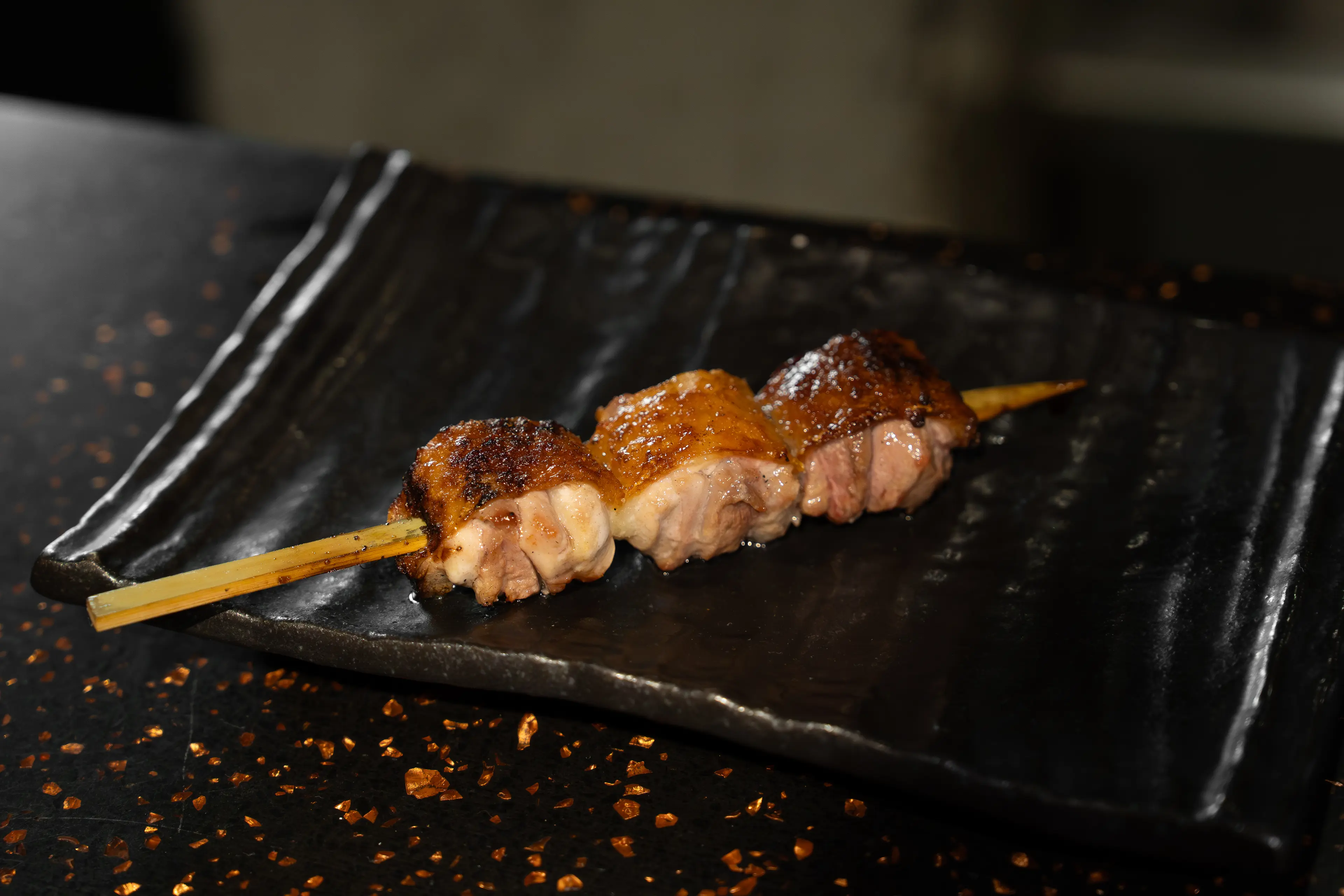
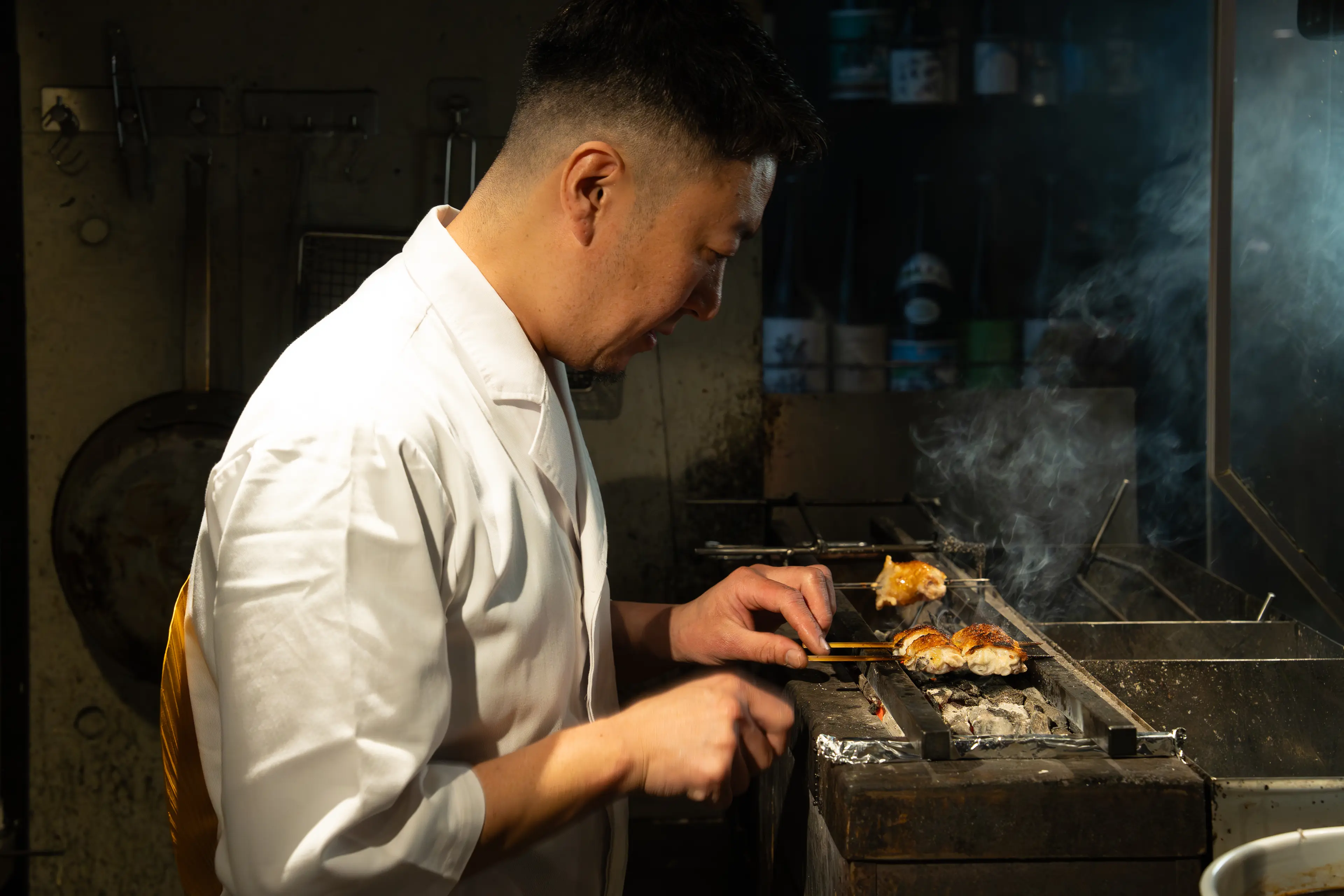
Even within the category of yakitori, the ideal level of doneness varies depending on the type of chicken and the cut. Personally, I believe it tastes best when the meat is properly cooked rather than rare. For that reason, I aim for the precise moment just before it is fully cooked through, finishing it quickly over high heat. However, for cuts such as sasami (tenderloin), overcooking can make the meat dry and crumbly. In those cases, I aim for a delicate balance—ensuring the heat reaches the center while retaining just a slight hint of tenderness.
——— When it comes to designing and structuring the course, what do you consider most important?
What I focus on in the course flow is contrast and rhythm. We begin with a soup, then warm the stomach with an “agedashi” dish featuring fried chicken breast and seasonal vegetables in a light broth. After that, we include a dish reminiscent of home-style cooking, such as tataki or a nikujaga-style preparation, before moving on to skewers like breast and thigh.
For the small dishes, we incorporate seasonal ingredients—for example, using butterbur sprouts dressed with miso or various wild mountain vegetables to express the season. When the richness of the chicken fat becomes more pronounced, we adjust the balance by offering lighter, more refreshing items such as the Manganji peppers mentioned earlier, hot vegetable dishes, tsukudani, or coarsely grated daikon, creating a moment of pause. We also make sure there is always something to enjoy while waiting for the next skewer to be grilled, so guests never feel they are simply waiting.
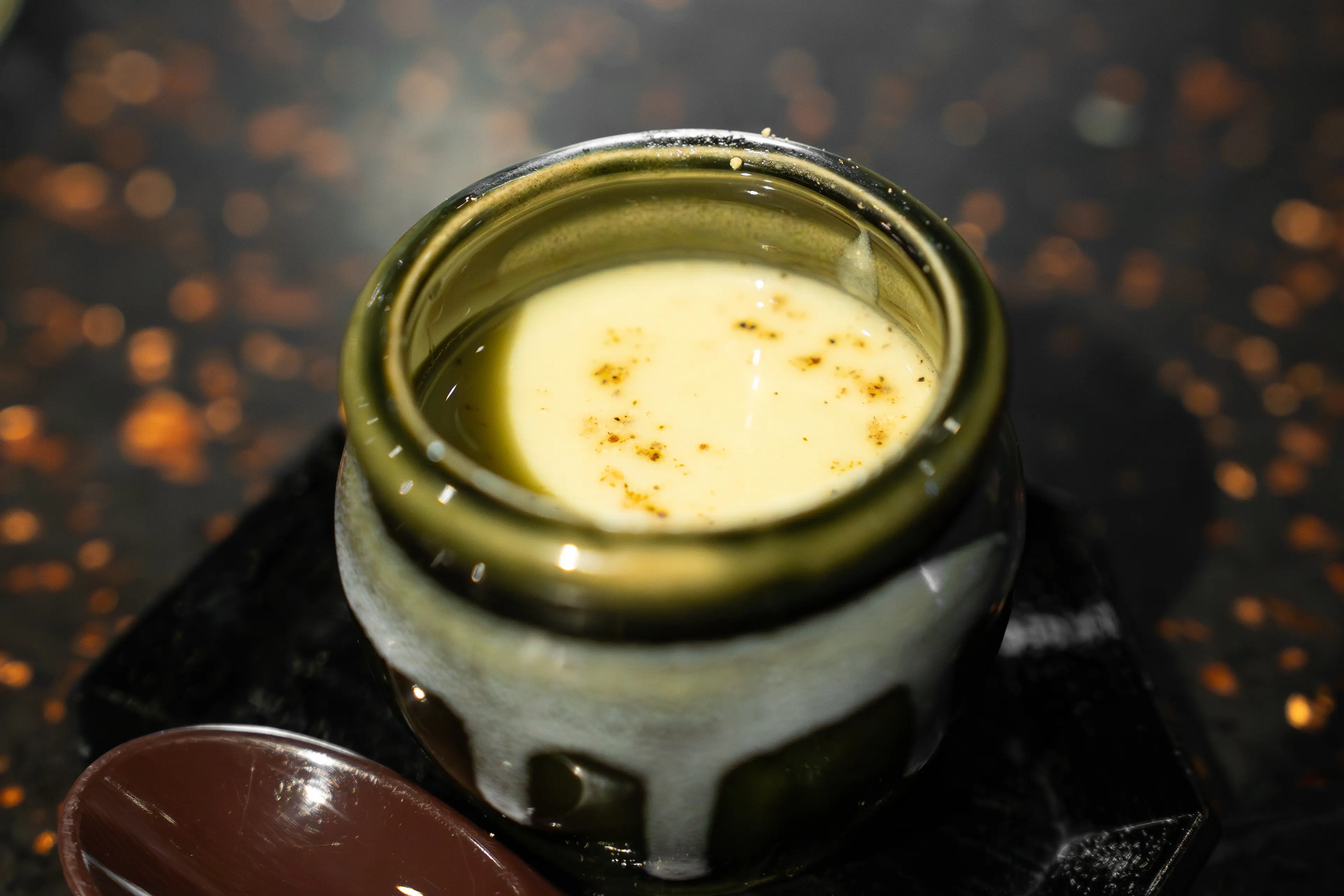
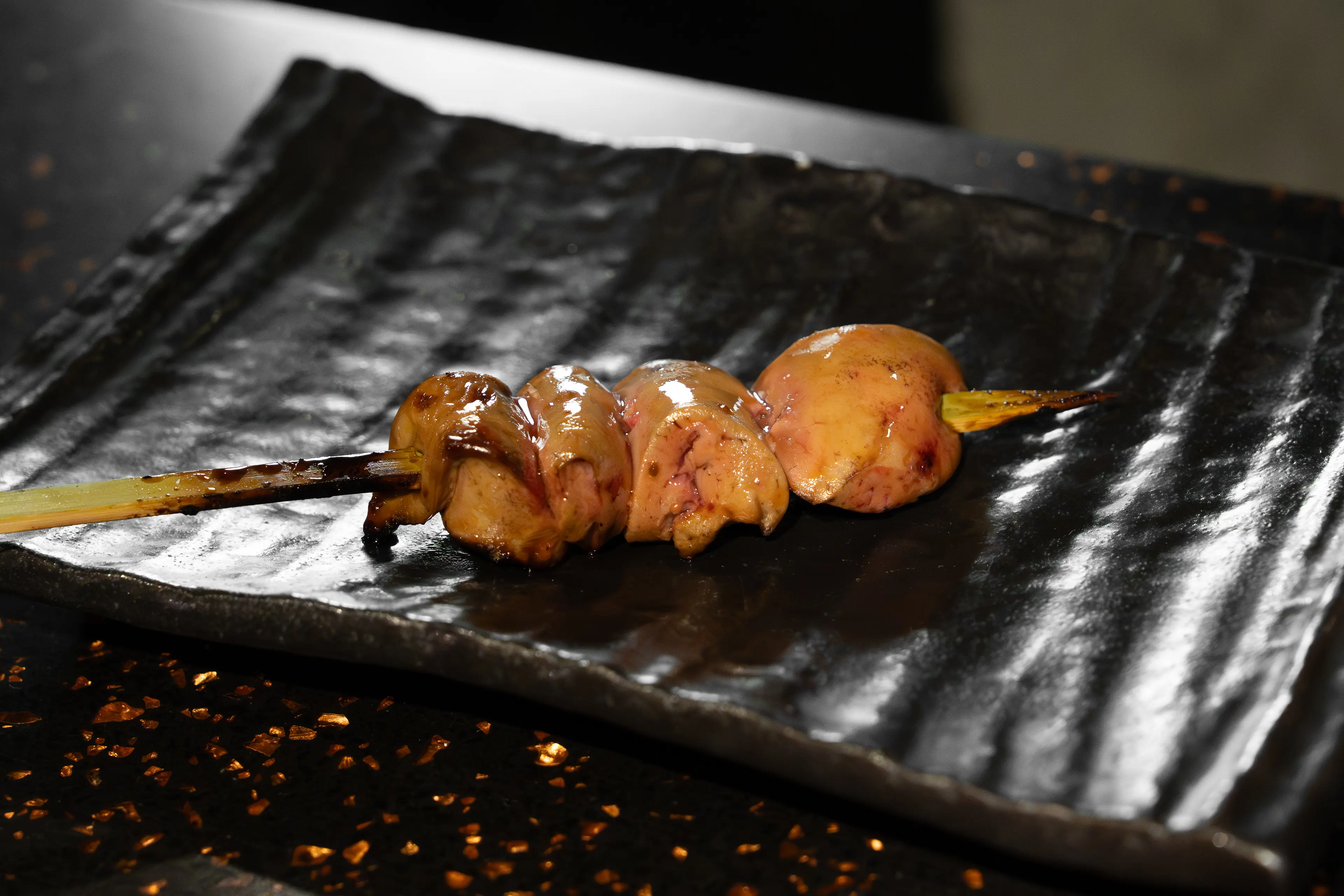
As the course progresses into the latter half, we introduce dishes with slightly richer flavors, such as liver seasoned more boldly and chawanmushi with cheese, adding a bit of variation. This is followed by smoked items and dishes featuring more unusual ingredients, along with seasonal grilled vegetables like new onions and young burdock, which are first simmered in dashi before being skewered.
Depending on the day’s ingredients, offal such as gizzards and hearts may also be included. In between, we incorporate palate-refreshing dishes like those prepared with sanbaizu or nukazuke, allowing the palate to reset and gently revive the appetite. The course concludes with tsukune, quail eggs, and a final rice dish.
Overall, I aim to create a course that remains engaging until the very end. By considering the body’s digestion and the natural rhythm of a meal, I strive to provide a dining experience that feels comfortable and well-balanced for our guests.
——— It seems your course includes an all-you-can-drink option. Do you also have particular standards when sourcing your beverages?
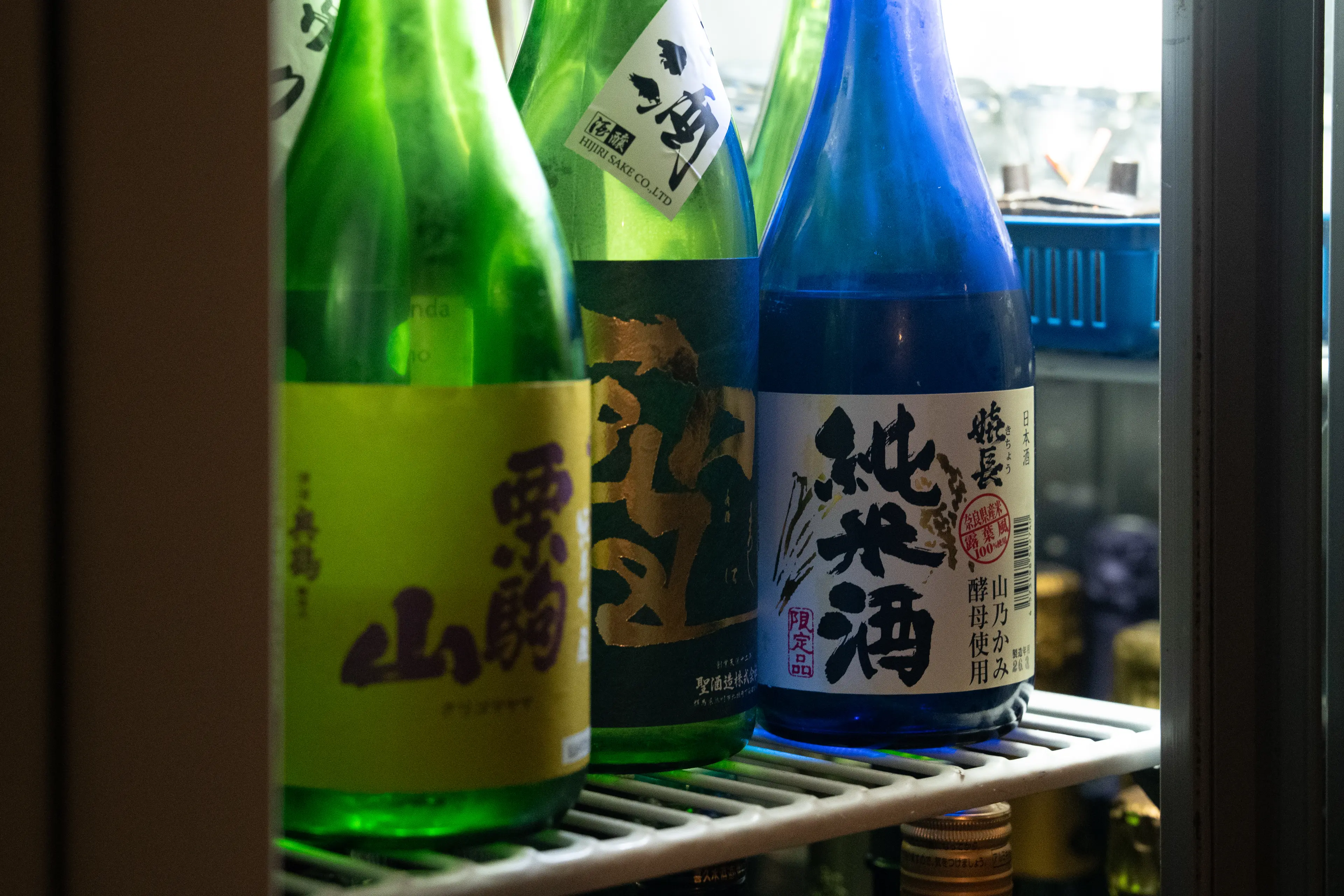
As for sake from Akita, we have a close relationship with a local liquor shop. Sometimes we request specific labels, and other times we incorporate selections they recommend. Because we’ve built a long-standing relationship and understand each other well, they are able to provide us with reliable choices, including seasonal offerings that align with our intentions.
Regarding sake from Nara, when I used to live in Urayasu, I once had a drink at a udon restaurant that left a strong impression on me. When I visited again later, I was introduced to the brewery, and since then, we have been sourcing directly from them. In general, we aim to offer as wide and diverse a selection of sake as possible.
Creating a space that will be loved for years to come
——— What do you value most when creating the atmosphere and welcoming your guests?
More than anything, I hope our guests can simply enjoy their time here. As the drinks start to flow, people sitting next to each other often become friendly, and sometimes those connections lead them to return together on another occasion. Seeing moments like that truly makes me happy. I’m usually in the kitchen, so it’s difficult for me to join the conversation, but I aim to create a warm and relaxed atmosphere where guests can naturally connect with one another.
When it comes to yakitori, we offer different types of chicken so guests can compare them. It’s always a pleasure to see people discussing their preferences—saying things like, “This one was the best,” or “I like this one more.” I hope this remains a place where guests can enjoy those differences in flavor, discover something new, feel a sense of excitement, and lose track of time.
——— Please tell us about your future prospects.
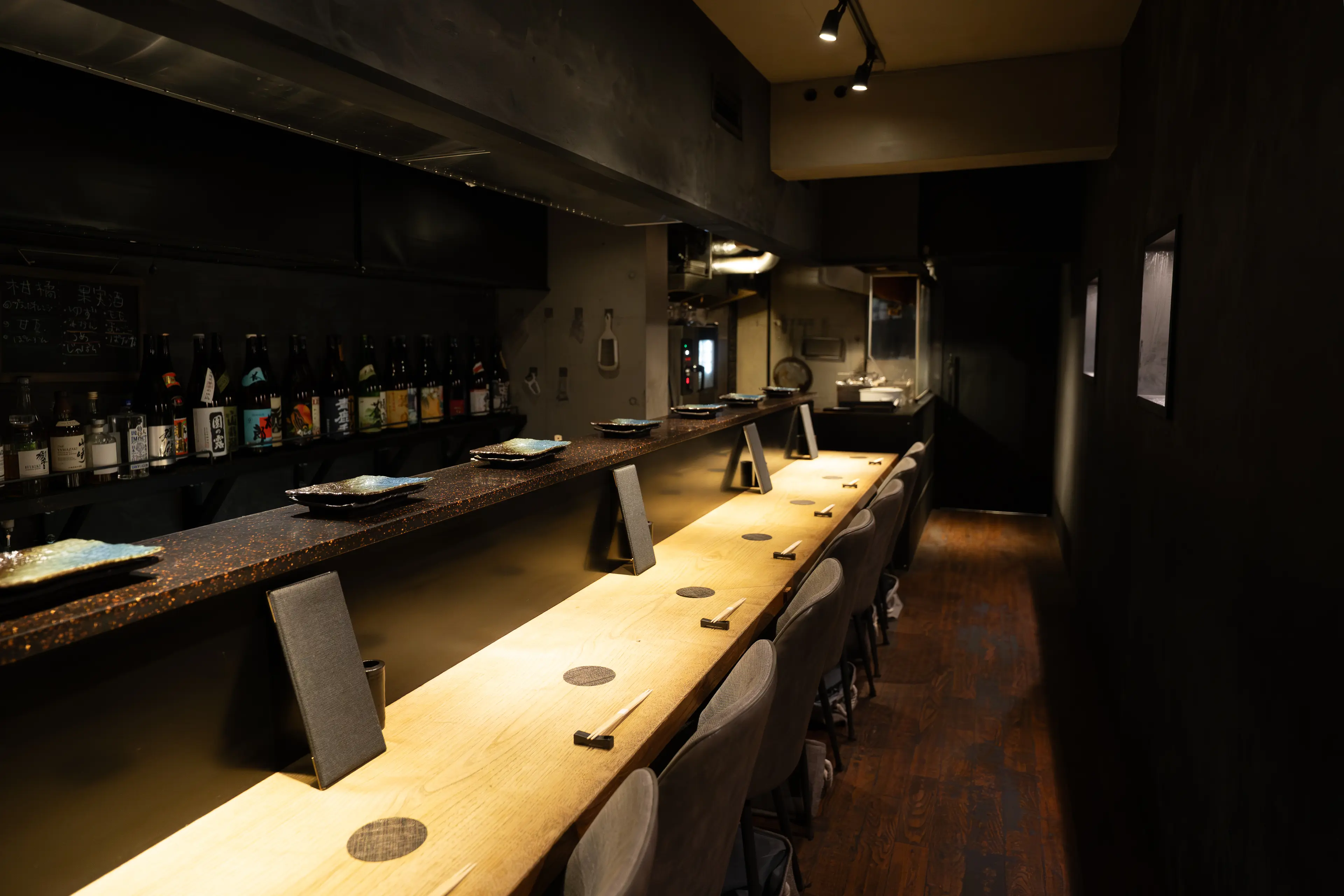
Someday, I would like to relocate if the opportunity arises. I want to redesign the grill so that I can stand at the center of a U-shaped counter and engage with guests while cooking.
I also want guests to make the effort to choose 【Tori Takuchan】 specifically, so I sometimes consider the option of moving to a quieter location with less foot traffic.
In the near term, my focus is on further enhancing our hospitality so that guests feel, “I definitely want to come back.” At the same time, I aim to continue refining the quality of our yakitori, so we can offer something even better than before.
——— Lastly, what does “delicious” mean to you, Mr. Takahashi?
It’s really simple, but it’s those moments when you can smile and feel happy.
I want to be a chef who can provide that.
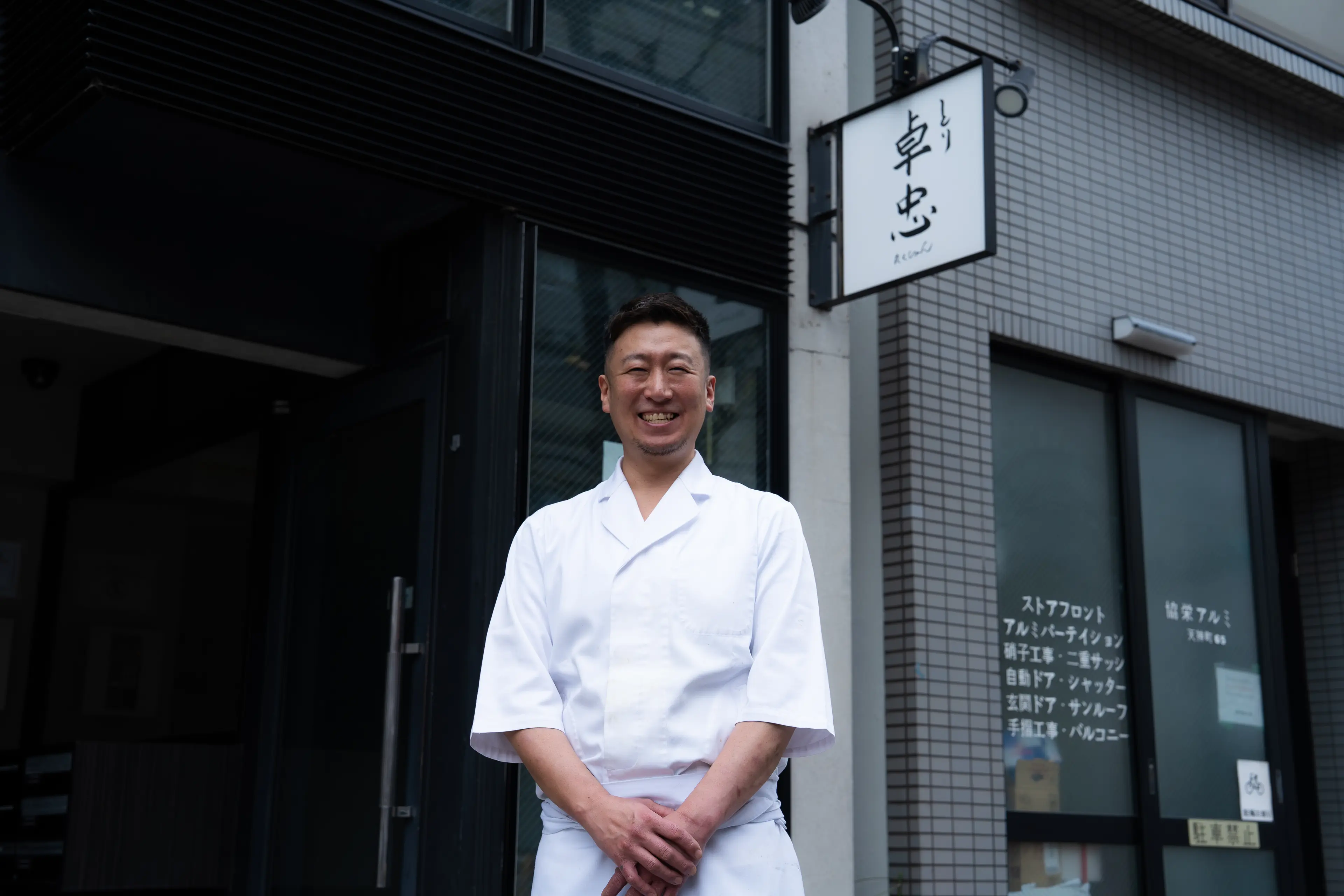
The experience of caring for others as a nurse continues to shape how Mr. Takahashi approaches his work as a chef today. Precisely because yakitori is such a simple dish, it demands true skill, sensitivity, and a steady accumulation of daily effort. What lies at the heart of his work is not merely serving food, but creating a space where people naturally connect and enjoy a comfortable, meaningful time together.
Going forward, he will no doubt continue to refine his sensibilities and express new value through each dish. We invite you to visit 【Tori Takuchan】 and experience Mr. Takahashi’s carefully crafted yakitori for yourself.
Interviews & Text: AutoReserve Magazine Editorial Team
Photography: Shoichi Baba
Restaurant Information
- AutoReserve Magazine
- [Tori Takuchan] Takuya Takahashi devotes himself with loyalty, serving carefully crafted yakitori that brings color to the table