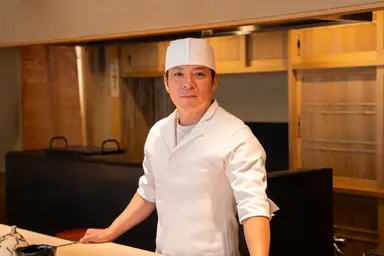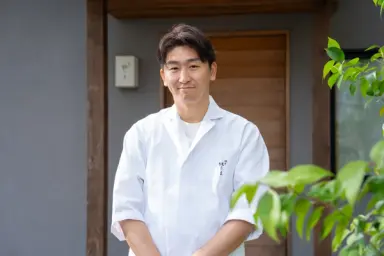

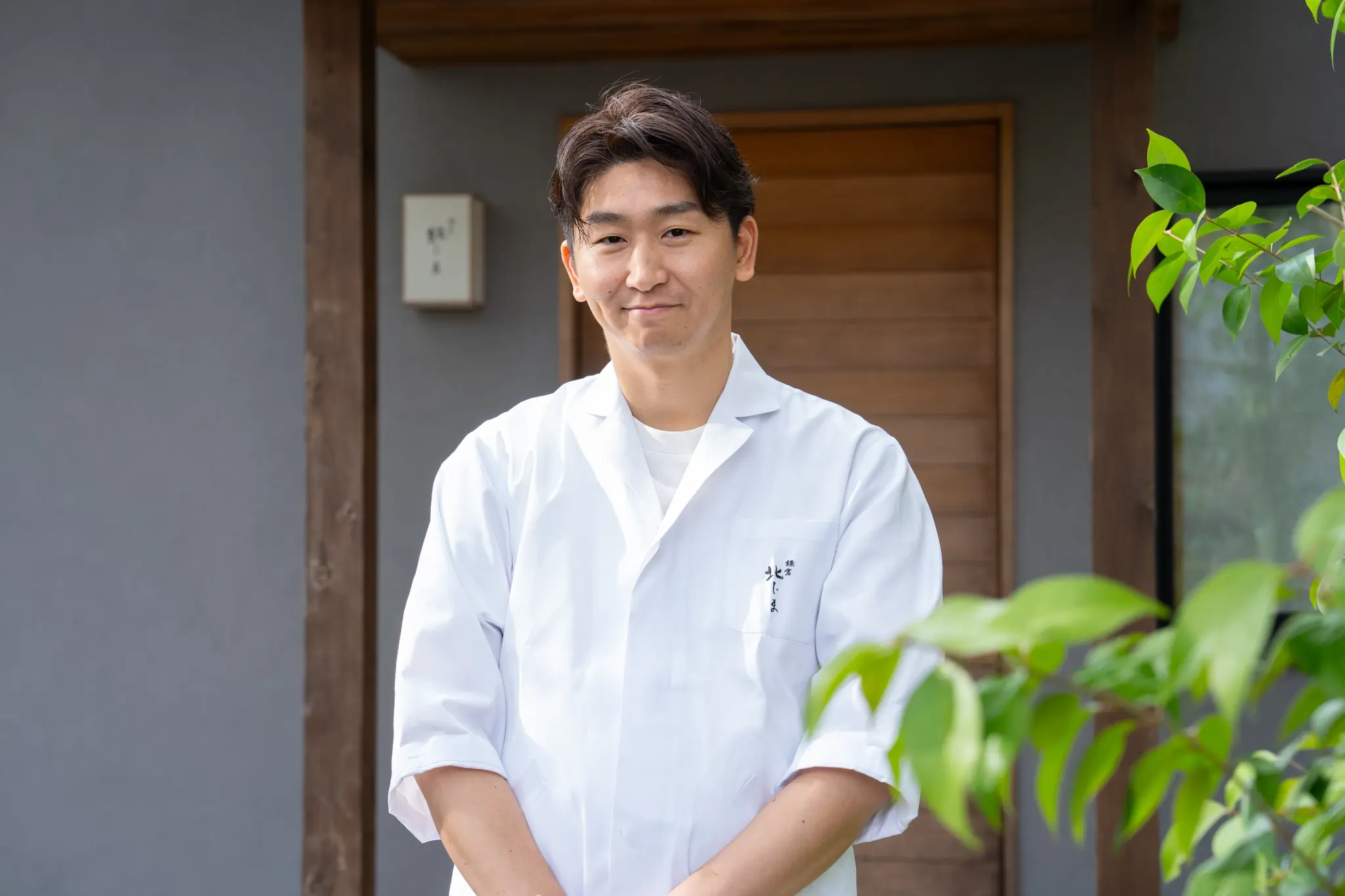
Japanese Cuisine Woven with Craft and Tradition: The Culinary Philosophy of Yasunori Kitajima at 【Kamakura Kitajima】
The moment I dove in, my heart was captured.
—What inspired you to become a chef?
I believe my mother had a strong influence on me. When I was in elementary school and my friends came over, she would cook for us, and everyone would be so happy. Seeing that made me realize how wonderful it is to bring joy to others. Naturally, I began to want to do the same through cooking.
One of the reasons I became interested in Japanese cuisine is simply because I am Japanese, but more than that, I was deeply drawn to its philosophy and spirit. I didn’t hesitate—I knew I wanted to pursue Japanese cuisine. Looking back now, I sometimes wonder if I might have been more popular if I had chosen to study French cuisine instead.
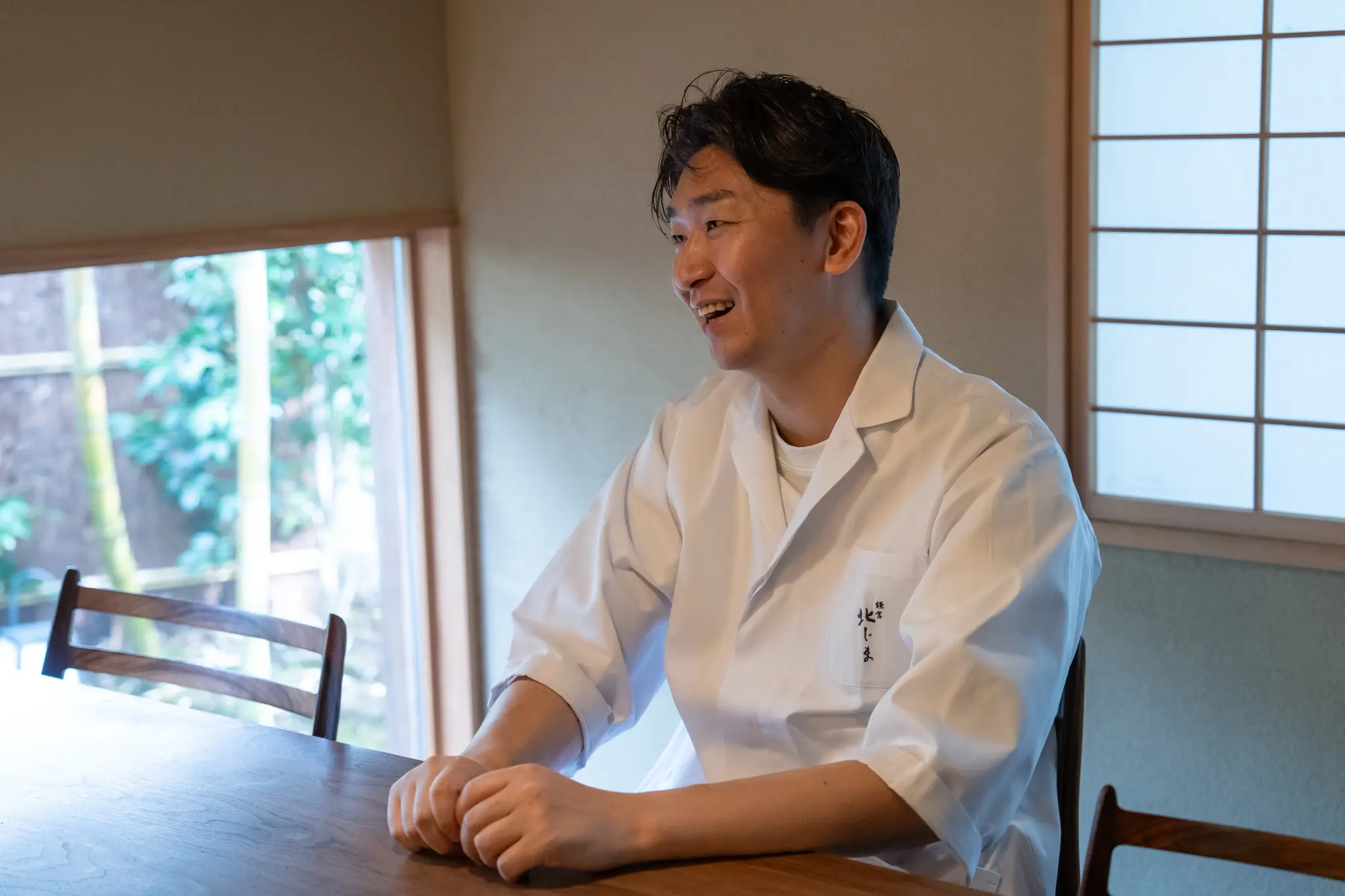
— From there, how did you come to pursue the path of cooking?
I seriously set out on the path of cooking when I was around 20. I hadn’t graduated from a culinary school, nor did I have a place lined up for training. I simply had a vague sense that if I wanted to learn Japanese cuisine, Kyoto was the place to be, so without knowing much, I left Kamakura and moved there on my own.
I happened to pick up a magazine that featured many Japanese restaurants, and I contacted them one by one, asking, “Would you consider hiring me?” However, it was around April, when most restaurants had just taken on new staff, so none of them were in a position to hire anyone, and I was turned away.
Still, I thought I should at least experience the food for myself, so I visited a number of restaurants. One of them was 【Wakuden】. When I dined there, even though I didn’t yet have a deep understanding of cuisine, I was deeply moved. I felt strongly that I wanted to create food like that, and I asked them directly, “Please allow me to work here.”
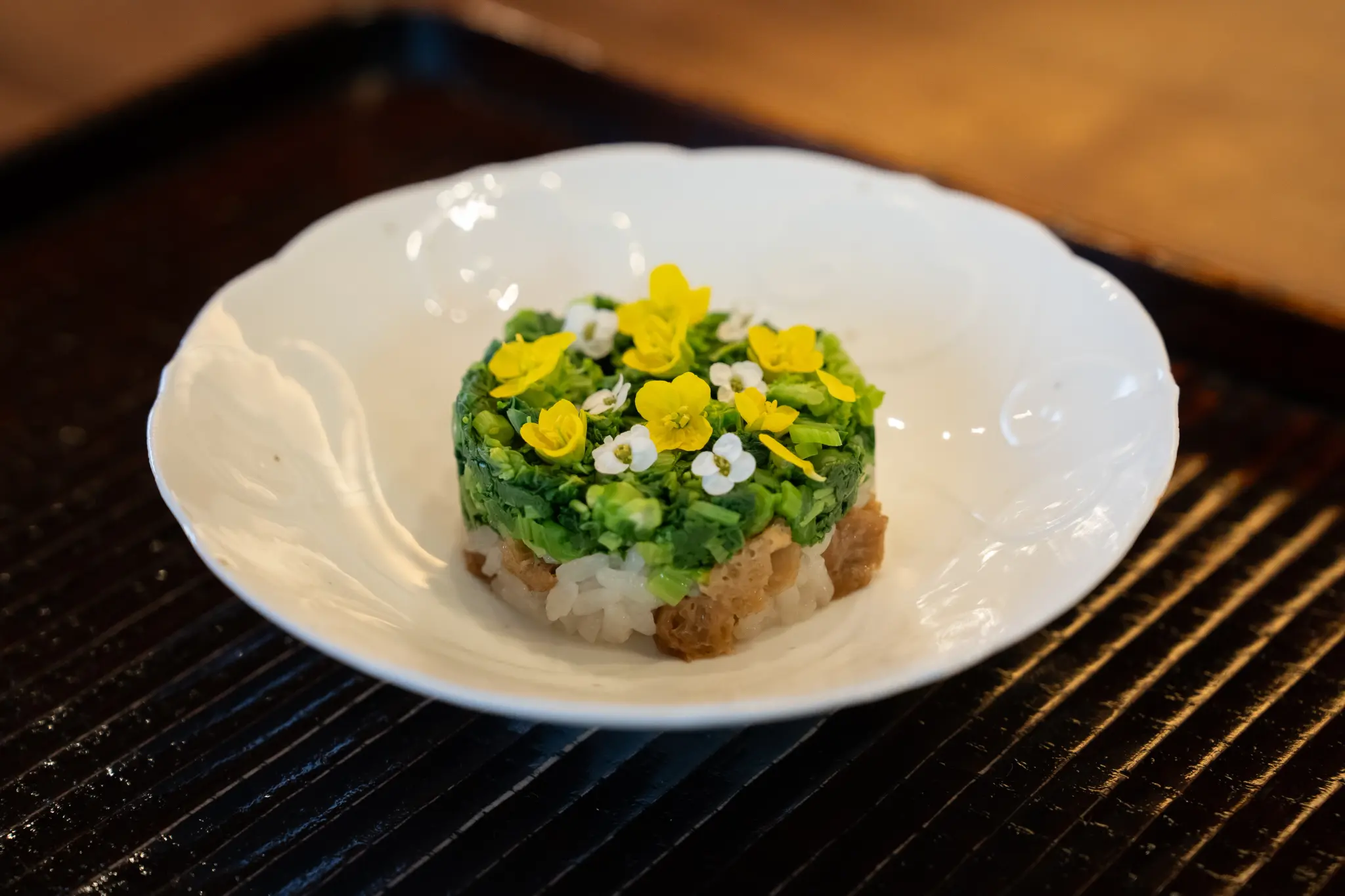
Beyond culinary training: exploring the depth of presentation and aesthetic sensibility
— Could you share an episode from your training days?
I spent 16 years at 【Wakuden】. A few years after I began my training, Yoshirou Kiyama, now the owner of 【Kiyama】, invited me to Osaka. We rode together on a motorbike in the rain, and at the Museum of Oriental Ceramics, he taught me many things as we looked at the vessels.
After that, I continued visiting places such as the Raku Museum and tea ceremony museums in Kyoto. Through these experiences, I learned what tableware truly is—its appeal and its depth—and gradually developed a strong interest in the vessels themselves.
At the time, I was also studying tea ceremony, which deepened my interest in utensils and tools. On my days off, I would visit utensil shops, where I had opportunities to learn from the shop owners. Although my salary was still modest at the time, if I found a piece I truly liked, I would sometimes take the plunge and buy it. I also visited furniture stores, where I learned about furniture as well.
As for cooking, I believe that if you continue training as a chef, you will gradually acquire the necessary skills. However, more than that, the things I studied on my own—such as tableware, presentation, and aesthetic sensibility—during my days off and breaks are now what truly shape my individuality as a chef, now that I have my own restaurant.
— Could you tell us about when you opened your restaurant?
I spent 16 years in Kyoto, so I had a solid understanding of the environment and had built relationships with familiar customers. I did consider opening my own restaurant in Kyoto, but the proprietress advised me, “If you’re going to run your own place, you should do it in Kamakura.” That is what led me to decide to return.
However, when it came to opening a restaurant in Kamakura, I felt there would be no meaning if it simply became “Kyoto cuisine you can eat in Kamakura.” I wanted to pursue something that could only be created in Kamakura—something that could not be achieved in Kyoto. It was from that desire that the concept of my restaurant began to take shape.
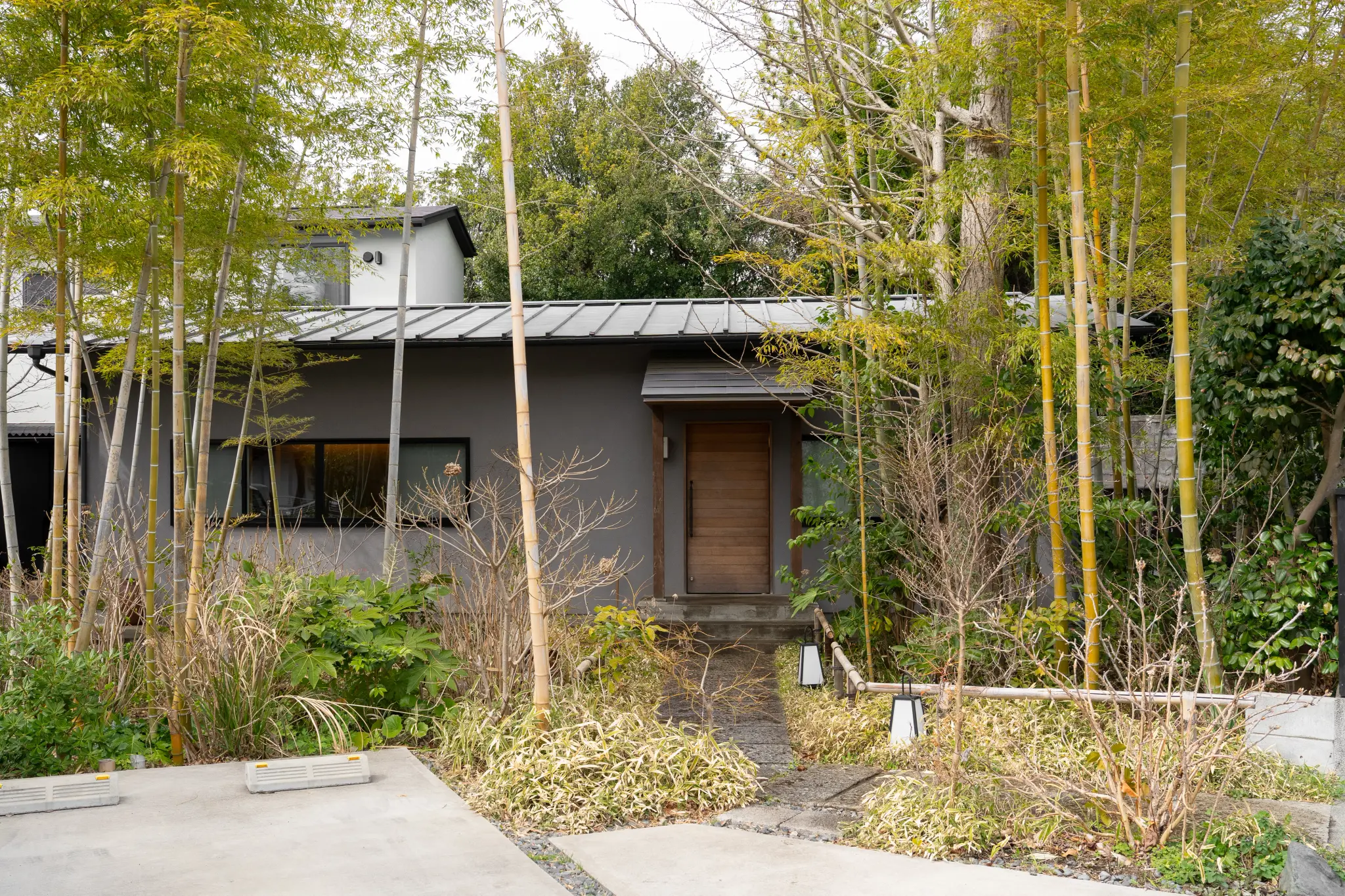
The location of 【Kamakura Kitajima】 was originally an old traditional house. When I first saw it, I naturally found myself imagining a future where I would be cooking there and guests would be enjoying their time, and I intuitively felt, “This is the place.”
When I consulted the proprietress I trust, she immediately came from Kyoto and encouraged me, saying, “You should choose this place.” She also gave me advice on the layout of the restaurant, and her words gave me a strong sense of reassurance. Choosing this location gave me confidence that I had made the right decision.
Vowing to rise again, moving forward together with my team
— I understand your restaurant was affected by a fire. Could you tell us about that?
Yes. In June 2024, about three years after we opened, we experienced a fire. It broke out during business hours, and the cause was an electrical fault. Fortunately, it was not connected to the dining area, so the flames did not spread, which was a great relief. If it had occurred when no one was present, there was a possibility the entire building could have burned down, so in that sense, it may have been a small stroke of luck.
As I stood there, frozen in front of the burning restaurant, one of my staff members said, “It’s okay—we can start over again.” Those words gave me the strength to move forward.
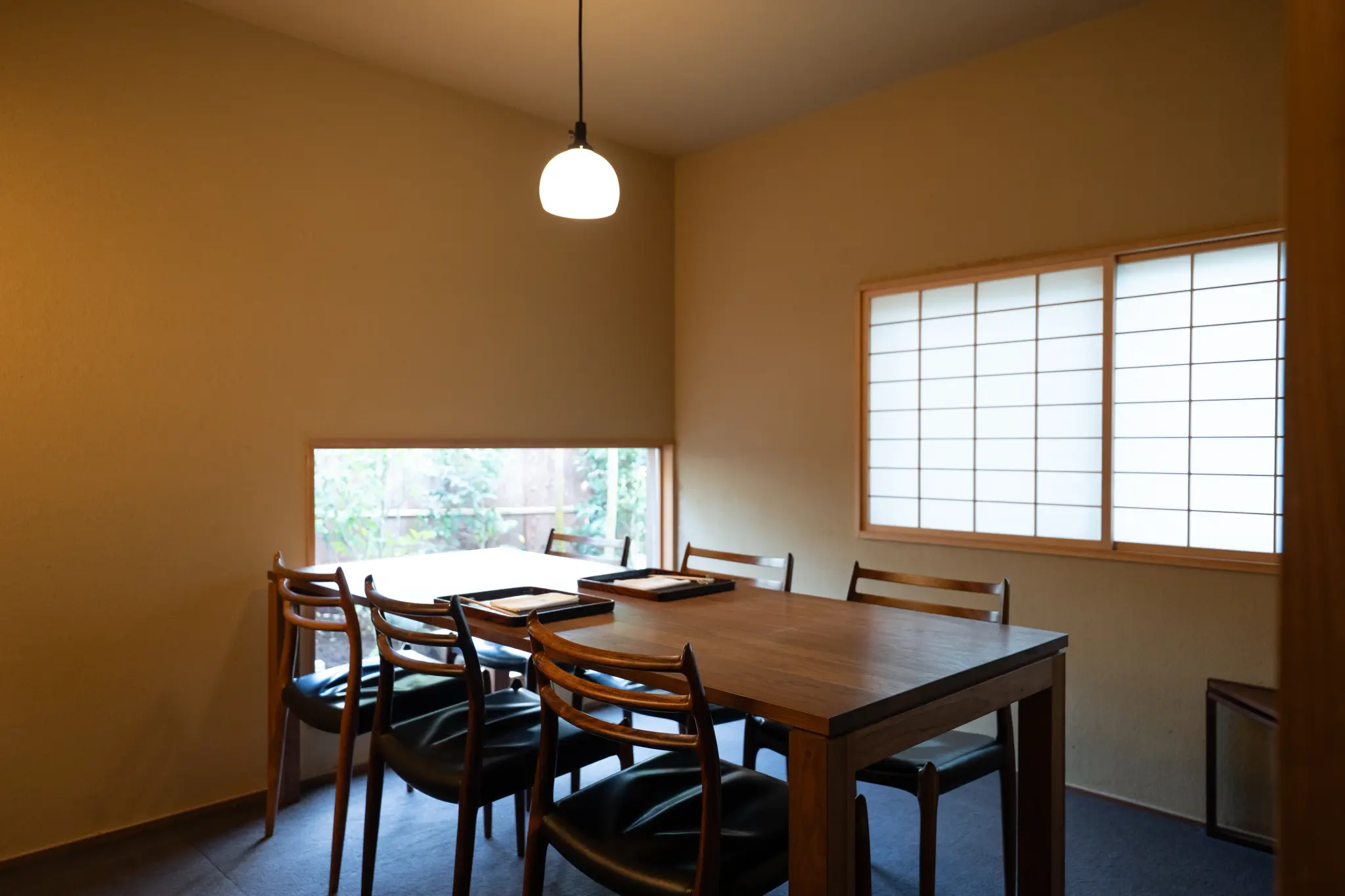
The private dining rooms and counter were unharmed, but the back-of-house and kitchen areas became unusable, making it difficult to continue operations for a while. I told my staff that I felt truly sorry, as they had joined us to learn and pursue cooking, yet suddenly found themselves in an environment where they could no longer cook.
I told them they were free to leave 【Kamakura Kitajima】, and that I wanted them to take this opportunity to think about what they truly wanted to do moving forward. However, they all chose to stay.
— From there, how did you move toward rebuilding?
We set up a cutting board and knife in the remaining space inside the counter. Since we still had a refrigerator, someone suggested that if we added a portable gas stove, we might be able to start cooking again. The very next day, we formed a reconstruction team, discussed how we could reopen in the shortest possible time, and began taking action with whatever we could do.
We resumed temporary operations about two and a half months later, and decided to make a full recovery around the six-month mark. We even set a specific date and began accepting reservations. With the determination to be ready to welcome our guests again, this was not just a goal—it was a decision.
When I was feeling overwhelmed and wondering if it was all over, it was my staff who encouraged me. They told me, “With what we have, we can make it work,” and helped me look forward again. In truth, I am the one who should be leading them, but instead, they were the ones who gave me strength.
The proprietress and those who had supported me during my time at 【Wakuden】 also helped with the restoration, each contributing in their own way. What I lost in the fire was immense—my tableware and tools were all destroyed, resulting in significant damage. But what I received in return was far greater.
As I was encouraged by so many people, my desire to repay them grew stronger than my sense of loss. I simply didn’t have time to dwell on it.
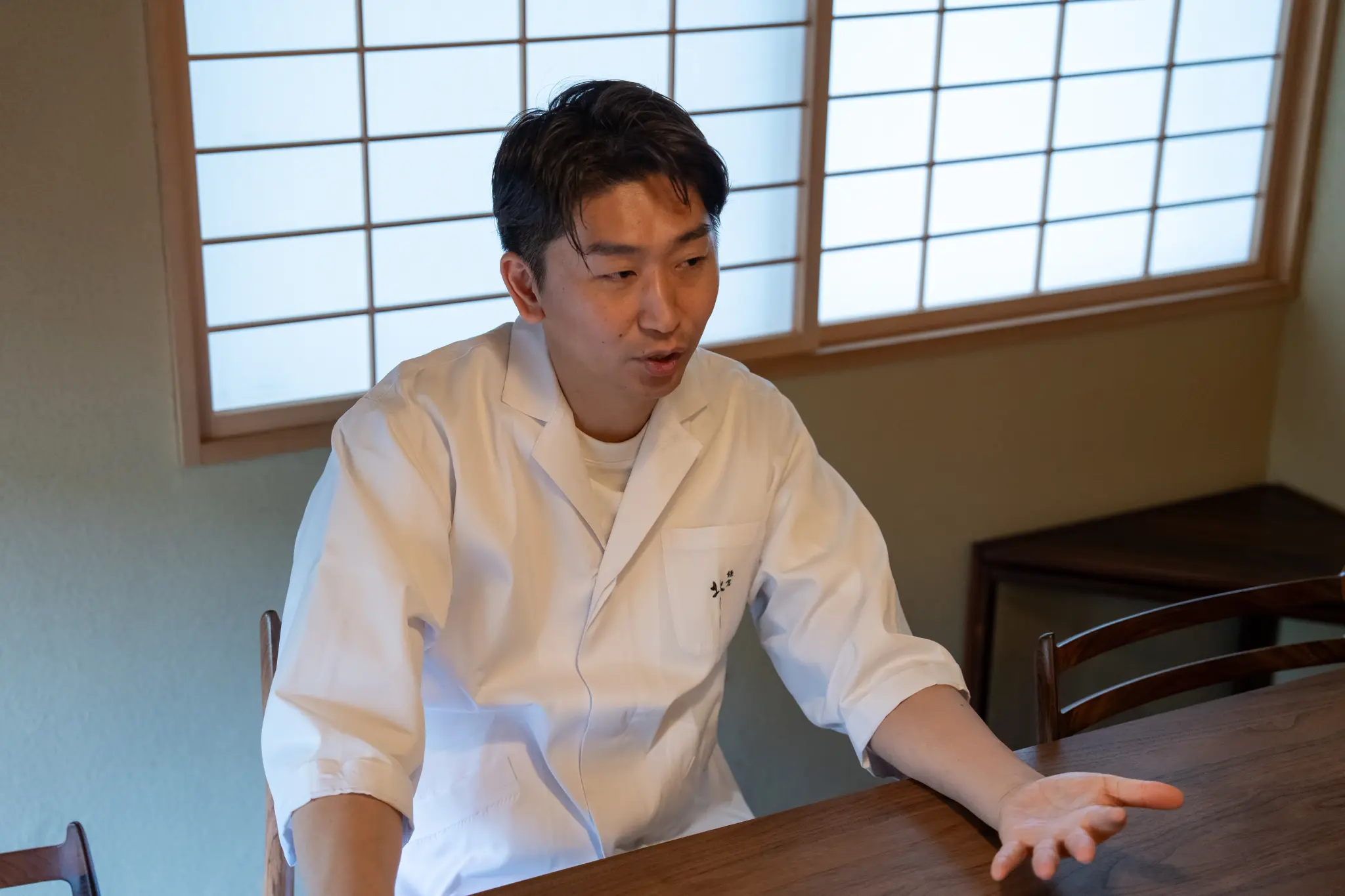
The role of a chef as a bridge between producers and guests
— What do you value most in your cooking?
As chefs, we are deeply grateful that we are able to cook every day because there are people who risk their lives to procure ingredients and entrust them to us. Some go out to sea under conditions where a single misjudgment could be life-threatening, and in the mountains there are constant dangers such as falling or encountering wild animals.
These ingredients are gathered in such harsh environments, yet they are offered to us with a smile and a simple “please.” It’s not something you can easily feel just by shopping, but it is certainly not something to be taken for granted. Farmers, too, are greatly affected by the weather—there are cold, rainy days when their hands go numb, and others when there is a real risk of heatstroke. Vegetables grown under such conditions are not easily obtained.
That is why I place great importance on showing respect to everyone involved in bringing these ingredients to us. By approaching ingredients with that respect, I feel that certain dishes naturally emerge, as if guided. When I imagine the thoughts of the producers—how they raised or harvested each ingredient—I get a sense that the ingredients themselves lead me toward the dish they are meant to become.While it may be common to first decide on a dish and then gather the necessary ingredients, I believe that the true essence of cuisine lies in creating dishes from the ingredients that are given to us.
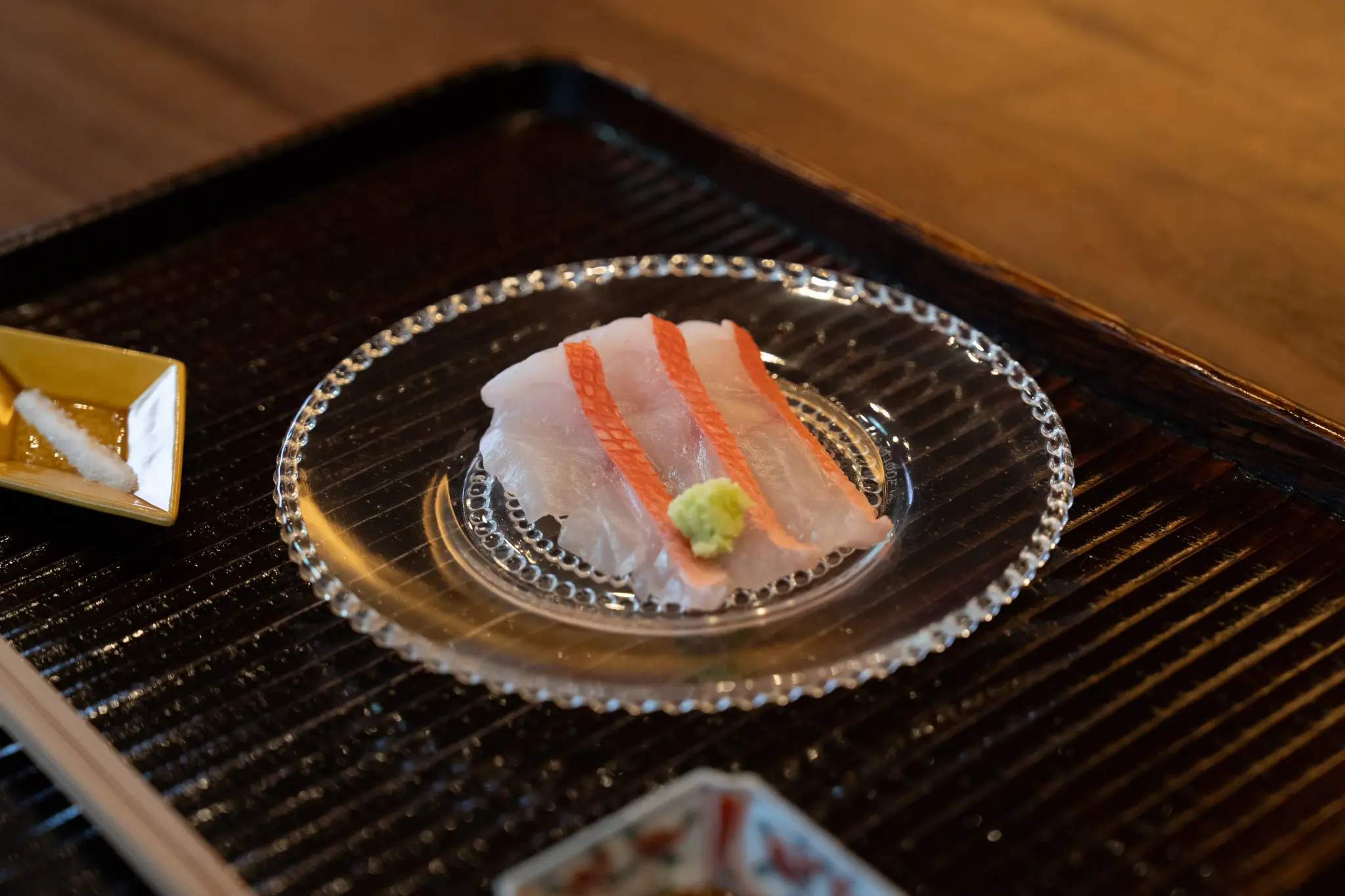
The care and dedication that producers put into their ingredients often do not reach customers directly. At the same time, customers’ voices rarely make their way back to the producers. That is why I believe it is the role of a chef to connect the two.I could never imagine keeping words like “That was delicious” or “Thank you” to myself. I want to make sure that each of those voices is respectfully conveyed to where it truly belongs.
— Do you have any particular preferences when it comes to ingredients?
When selecting ingredients, I place great importance on using products from the local area. When local guests visit, I want them to discover that their region has such delicious ingredients and such a rich environment capable of producing them, and to feel a sense of pride. We also have many guests who travel from far away. They spend two to three hours just for a single meal, and even more when considering the round trip. Because they are giving us their valuable time, I believe it is our responsibility as a restaurant to offer an experience through ingredients that cannot be found elsewhere.
For example, we serve fish that are not widely distributed, such as budai (parrotfish) and kurosibikamasu (blackfin barracuda). By actively using lesser-known ingredients, we can provide guests with a unique experience, spark conversation, and offer opportunities for new discoveries. I also believe that this can ultimately contribute to environmental sustainability. If a guest remembers that the blackfin barracuda they had was delicious, and later sees it on another menu and says, “I’ve had this before—it was great,” or “I really like this,” it may inspire other chefs to use it as well. As more restaurants begin to serve it, it will circulate more widely, even at higher prices. This, in turn, benefits the fishermen, encouraging them to continue harvesting it.
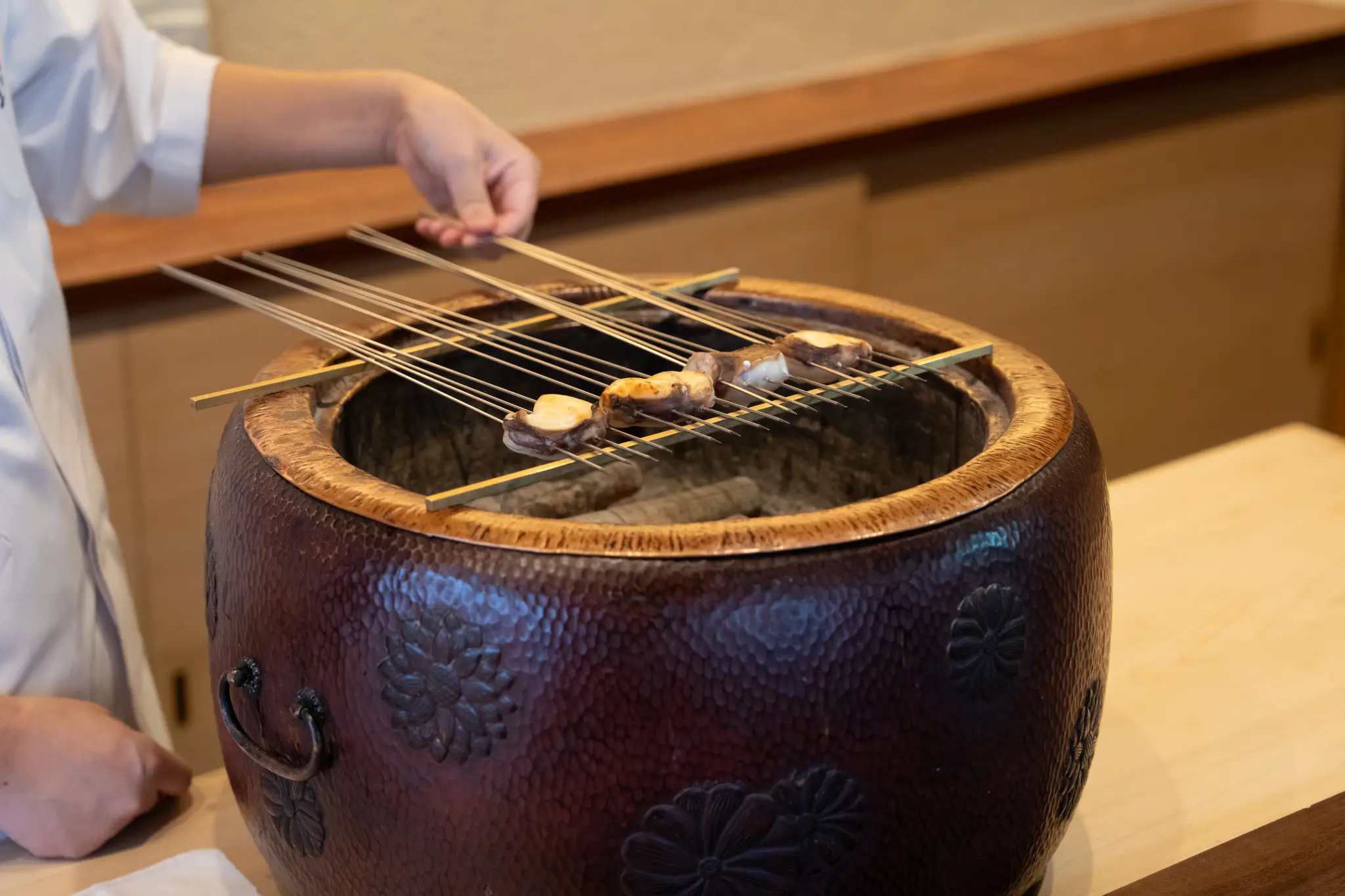
Today, the decline in fish stocks due to overfishing has become a serious issue. However, there are still many species that are not heavily targeted and remain underutilized. I believe that if we can diversify the focus of what is being caught, it could contribute, even in a small way, to environmental sustainability.
It is said that if things continue as they are, by 2048 the oceans may reach a point where fishing is no longer viable. As a chef, I want to do what I can to address this issue. It would be truly unfortunate if, by the time future chefs are finally able to open their own restaurants, there are no fish left to work with. With that in mind, I choose my ingredients very carefully. I believe that while my influence may be small, it is not insignificant.
Creating an extraordinary dining experience—and the future we envision beyond it
— Is there anything you keep in mind in how you engage with your guests?
I’m always thinking about how I can ensure that our guests truly enjoy their time. Since I serve Japanese cuisine, I place great importance on seasonality and the traditional calendar. Many of our guests visit every month, so I make sure that neither the setting nor the dishes are the same as the previous month, and I also try to make them different from the same period in the previous year. This naturally requires a wide repertoire of dishes and also provides valuable opportunities for our staff in training to deepen their knowledge.
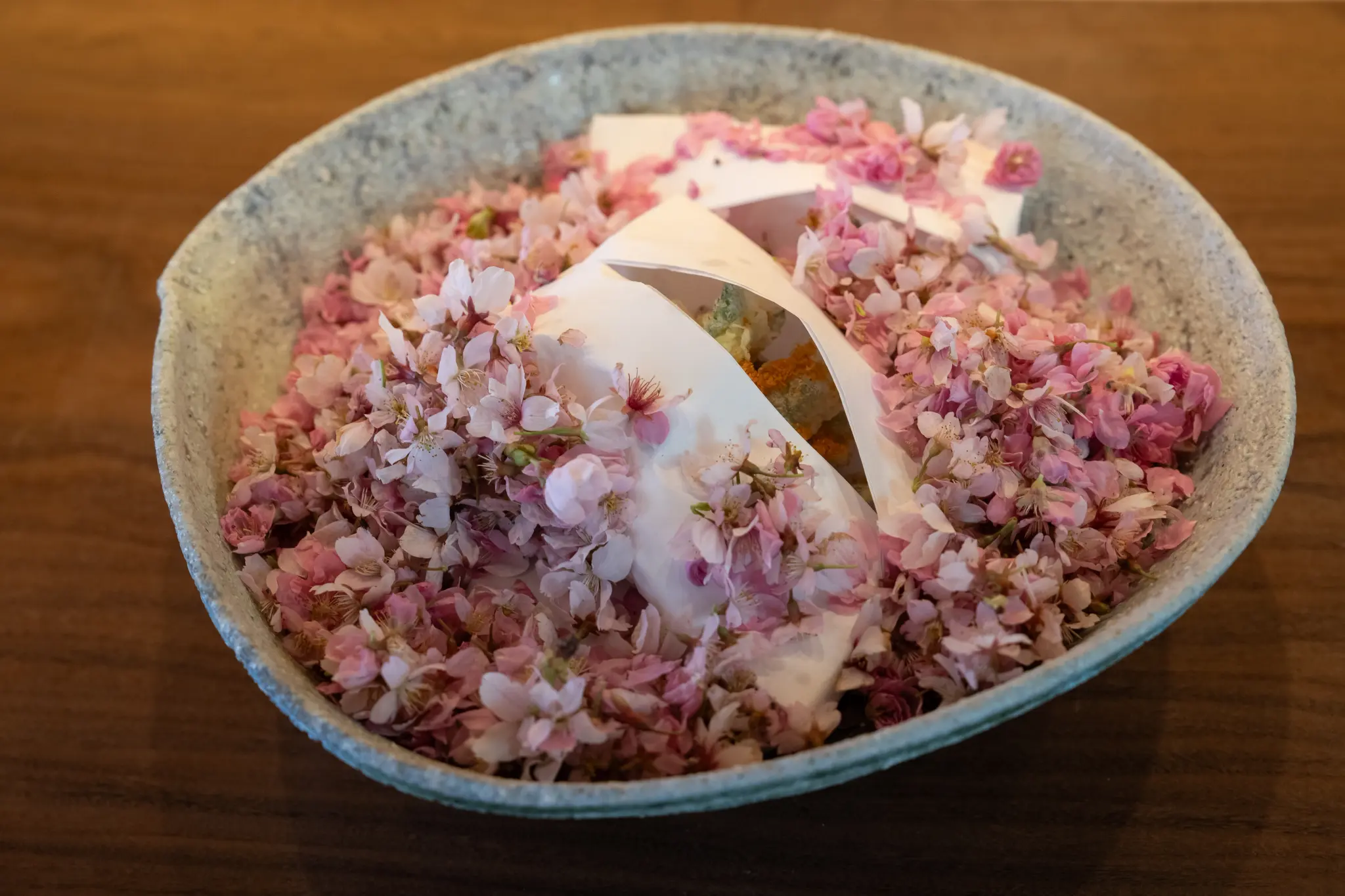
When it comes to the setting, I believe it wouldn’t be interesting if it remained the same as before, so we create a different story each time. At first glance, some elements may seem unusual, but each of them carries its own meaning and narrative. I make a conscious effort to ensure that guests can enjoy not only the cuisine, but also the overall experience beyond the dishes.
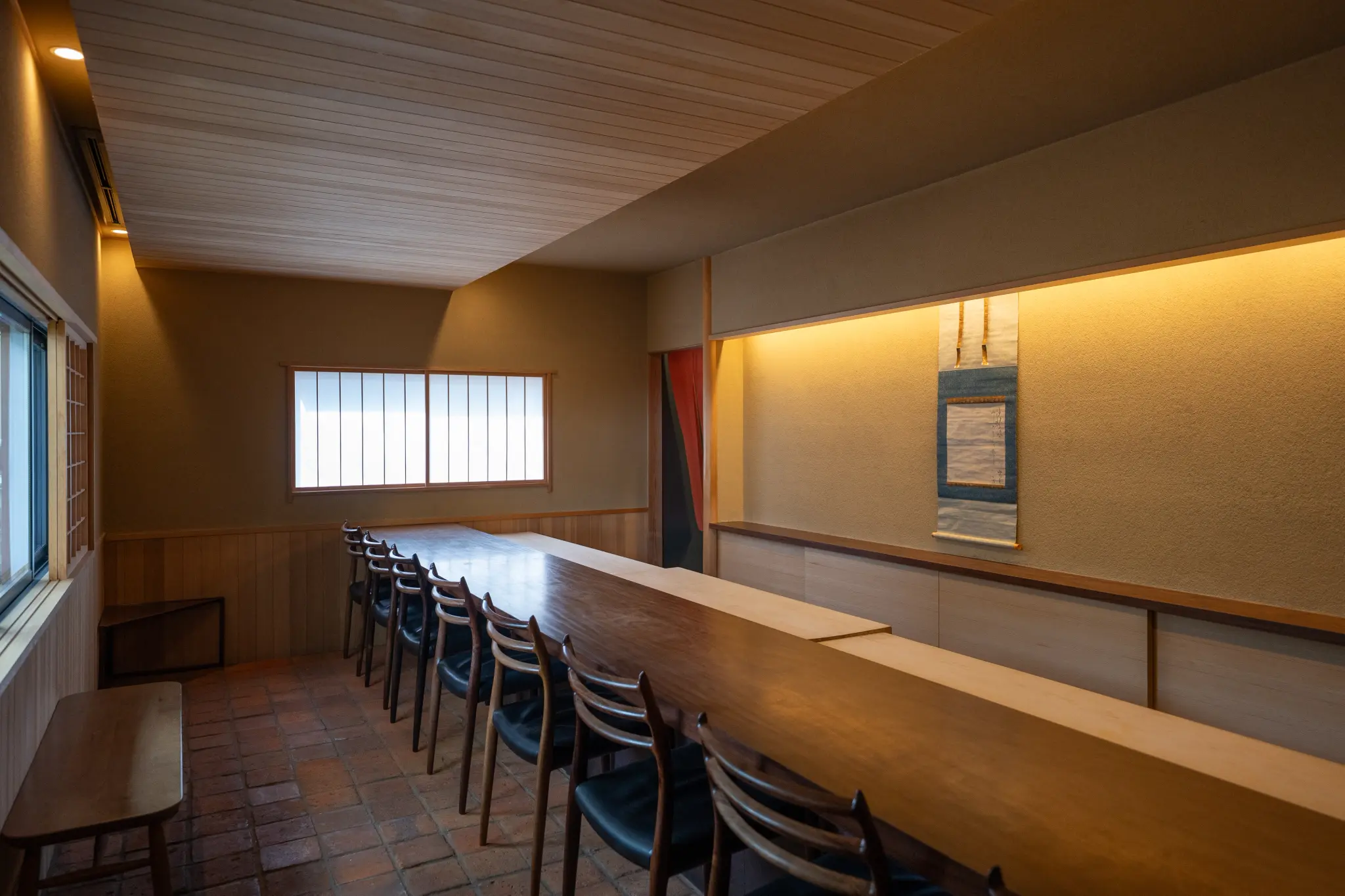
From the counter seats, we generally ensure that nothing in the kitchen is visible except the knives. This is because we want guests to enjoy an extraordinary dining experience within a simple, refined space. While there is certainly an appeal in watching the cooking process, if everything is visible, that sense of the extraordinary can fade. We believe that preserving this atmosphere is one of our strengths, and it is something we are particular about.
We also make a point of giving our younger staff more opportunities to interact directly with guests. We sometimes hear comments such as, “You’ve improved a lot,” or “Your presence has really changed,” and it would make us very happy if guests could watch over them and look forward to the growth of these future talents.
— Do you have any vision for the future?
I have no intention of expanding 【Kamakura Kitajima】 or opening multiple locations. However, I believe that continuous, incremental updates are always necessary. I challenge myself with new dishes every month, and I aim to keep evolving every aspect of the restaurant—from the setting and tableware to the service.
I am also very interested in how my current staff will grow and what paths they will take in the future. I believe that, as both an owner and a head chef, it is my role to envision the future together with them. Not being able to see a clear future can be unsettling and difficult, so I feel it is important to provide an environment where they can imagine a fulfilling and prosperous future. As it has become increasingly difficult to open a restaurant these days, I would like to support the younger generation in becoming independent. I suppose that will be my next challenge.
In fact, I have a staff member who is planning to open a sushi restaurant, and I am currently in the process of securing funding on his behalf and preparing to establish a restaurant in Kamakura that he will eventually take over. Once the business is on track, I plan to transfer ownership to him.
There is no meaning in my success alone. I want to contribute to elevating Kamakura as a whole through its food culture. I hope to build a network where we can share information and collaborate, making Kamakura an even more attractive destination known for its cuisine. I believe the area has great potential, and it will depend on how restaurants take the initiative moving forward. At the same time, I would like to ensure that producers receive the recognition they truly deserve.
— Lastly, what does “delicious” mean to you, Mr. Kitajima?
I believe it is “preciousness.” The fishermen who risk their lives to go out to sea are precious, and the fish themselves carry the energy of having survived the harsh forces of nature. I believe guests can sense the value in ingredients that are filled with that kind of energy. It is value, it is energy, and it is also the beauty we perceive from nature—together, all of these elements come to define what we call “delicious.”
Of course, this does not apply only to fish. The same is true for vegetables, wild plants, and meat. I believe that people feel a sense of strength, beauty, and preciousness within these ingredients. These qualities are also essential in shaping what we perceive as deliciousness.
As chefs, we are entrusted with the value of lives that might otherwise have continued to exist. We must never forget that, and we have a responsibility to ensure that we do not diminish the value of those lives. I believe that this responsibility lies at the very core of being a chef.
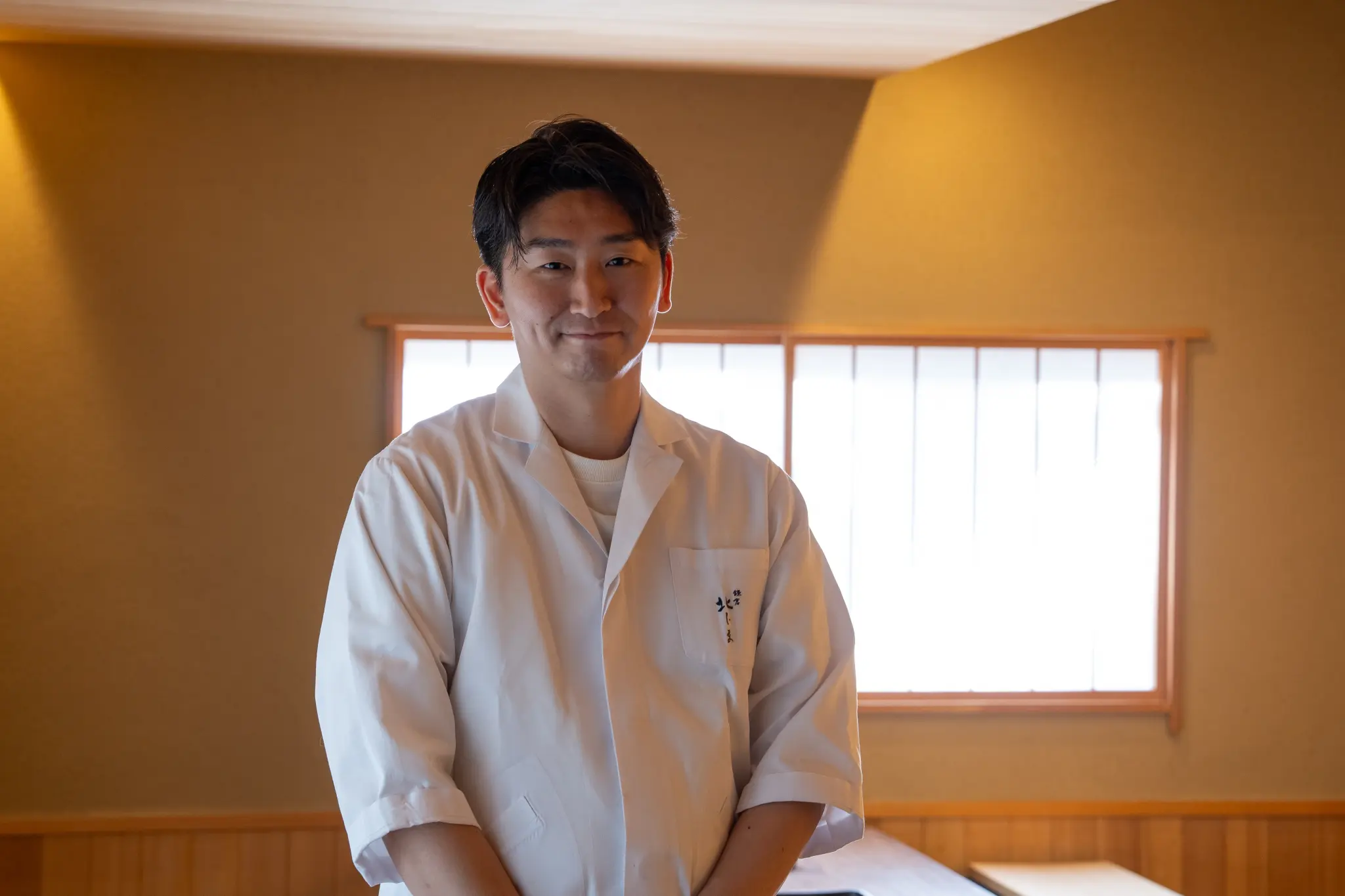
A chef’s role is not only to create delicious dishes, but also to carry forward the life of the ingredients and the intentions behind them. In the words of Mr. Kitajima, one can sense a deep conviction and sense of responsibility. He takes on the passion of the producers and the powerful energy of nature embedded in each ingredient, expressing it all on the plate. He believes that a chef’s role is to deliver that value to the guests, and in turn, convey the guests’ joy back to the producers. We invite you to experience Mr. Kitajima’s Japanese cuisine at 【Kamakura Kitajima】.
Interviews & Text / AutoReserve Magazine Editorial Team
Photography / Shoichi Baba
Restaurant Information
- AutoReserve Magazine
- Japan’s world-renowned flagship restaurant
- Japanese Cuisine Woven with Craft and Tradition: The Culinary Philosophy of Yasunori Kitajima at 【Kamakura Kitajima】