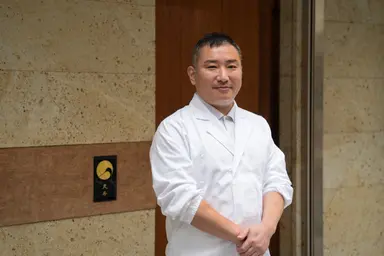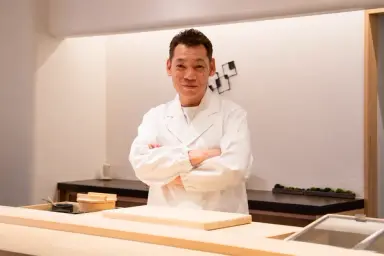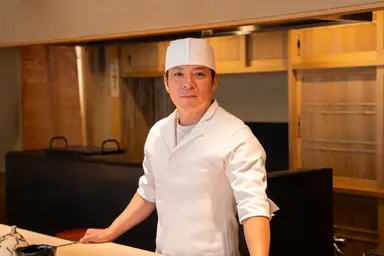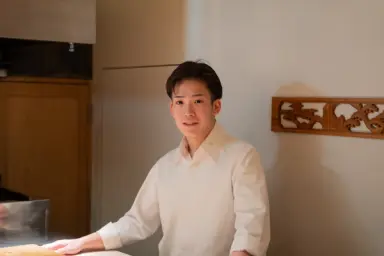

【Ugai】 Ryogo Fujii’s Unwavering Philosophy: Embracing the Finite and Pioneering Japanese Cuisine Through Sensibility
Resolving to Become a Chef in Middle School
— What inspired you to become a chef?
My father is a sushi chef, so cooking has been a familiar part of my life since I was very young. I also had a desire from an early age to do something different from everyone else, and by the time I was in junior high school, my wish to become a chef had grown stronger than my wish to continue studying and go on to higher education. So when I graduated, I chose to pursue the path of a chef.
Going to culinary school was one option, but studying at school often felt painful for me, so I figured it would be better to learn on the job, even if it meant going through a lot of hardship.
As for why I chose Japanese cuisine, when I first set my sights on becoming a chef, I never even considered any genre other than Japanese food and didn’t think about other options. Also, because I’m Japanese, I had a strong desire to work specifically with Japanese cuisine.
— That was a remarkably determined decision to make at such a young age.
At the time, many people around me—including adults—were opposed to my decision to become a chef. I was told things like, “The moment you decided not to continue your education, your future was over,” and “Someone like you will never make it as a chef, so give up and go back to school.”
Since I entered the workforce at such a young age and lacked both life experience and professional experience, I began my training at a restaurant that had connections with my father.
Moved by a Chef’s Refusal to Compromise
— Do you have any memorable stories from your years of training?
I still treasure something my father often told me: “You can have more confidence than anyone else, but never become overconfident or arrogant.” It’s a lesson I continue to live by, and one that I share with the staff at 【Ugai】 as well. I believe that the moment you become complacent, your growth stops, so I constantly remind myself to stay grounded.
To be honest, I don’t have many fond memories of my apprenticeship years. I was the type of person who spoke my mind even to senior chefs, so clashes were fairly common.
One experience from those days, however, remains vividly etched in my memory. I was dining with my father at a Japanese restaurant, experiencing a full kaiseki course for the first time. As the meal progressed, the restaurant’s signature soup course was about to be served. It appeared that the presentation of just one bowl had been disturbed. Yet despite it affecting only a single serving, the chef decided to remake every bowl for every guest.
As a result, it took nearly forty to fifty minutes before the dish was finally served. At first, I wondered whether it was really necessary to start over for everyone. But what struck me most was the pride they took in what they served.
Watching that scene, I was deeply moved by their refusal to compromise. There was a clear conviction and unwavering standard behind their actions. Even while the atmosphere in the room seemed to be saying, “Please hurry and serve the dish,” they calmly remade everything from the beginning. The way they carried themselves—as if to say, “This is simply the right thing to do”—left a lasting impression on me.
It made me aspire to become a chef with that same level of dedication and integrity.
— It must have been a formative period in your life. What gave you the drive to keep moving forward without losing your focus?
A large part of it came from the frustration of not being expected to succeed and from a strong sense of defiance. In a way, hearing people say things like, “You’ll never make it,” “You’re no good,” or “You can’t do it,” almost motivated me. It only made me want to prove them wrong, develop my skills, and become independent as quickly as possible.
I think this is something often seen in well-established organizations. In restaurants with many senior apprentices, you can usually predict your future path—you know roughly which position you’ll be given and when. Having that sense of security can sometimes lead people to become satisfied with where they are and, ultimately, complacent.
That’s why I’ve always believed that, rather than working in an environment based on seniority or automatic promotion, placing yourself in a merit-based environment where you are constantly challenged by competition is the fastest way to develop real ability.
Cherishing each moment, because everything is finite
— Could you tell us about when you opened your own restaurant?
I wanted to create something meaningful together with people I trusted—a single work that we could proudly call our own. Opening a restaurant was the way I chose to express that aspiration. The name 【Ugai】 comes from the idea that all things are finite. That applies not only to ingredients, but also to the people behind them. The number of producers continues to decline year by year, and I feel that reality very strongly. Because everything has its limits, I believe we must treasure each ingredient, each encounter, and each moment that is given to us.
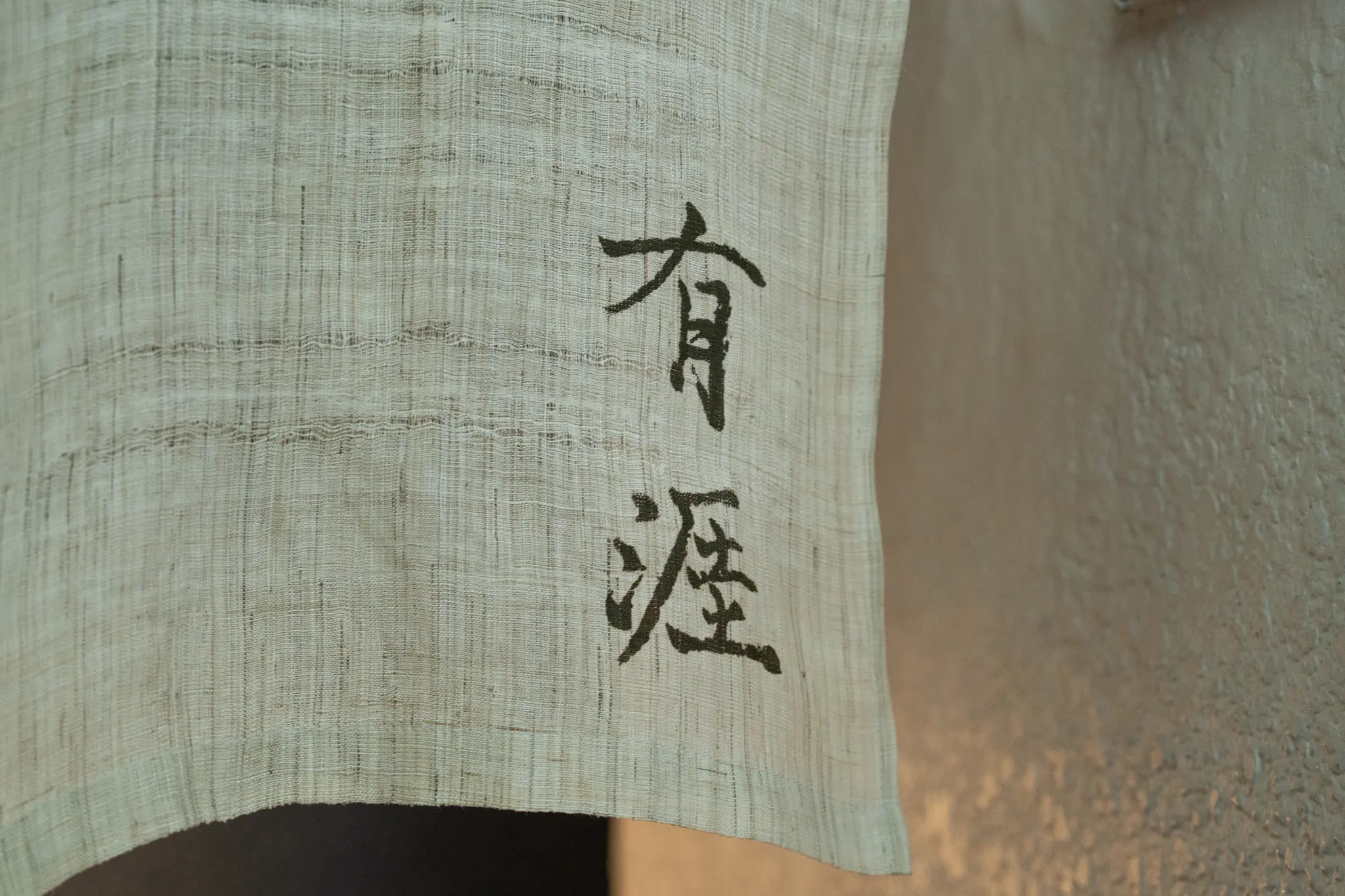
As we look 20 or 30 years into the future, there is a real possibility that we may no longer be able to create the same dishes we serve today. With that in mind, the name also reflects my desire to cherish finite resources, use them responsibly, and pass them on so they can endure for future generations. That philosophy is one of the reasons why we have begun growing our own rice in Gotemba, and why, starting this year, we have also taken on the challenge of cultivating a variety of vegetables ourselves.
The same idea applies to human connections. Encounters with producers, colleagues, and guests are all finite, and I try to approach each one with the awareness that every relationship and every moment is precious because it will not last forever.
Continuing to Refine My Sensibilities as a Chef
— Is there anything you particularly value when it comes to your cooking?
Because I want our cuisine to express the identity of 【Ginza Ugai】, I never try to create dishes that resemble someone else’s. What I focus on is creating cuisine born entirely from our own sensibilities. I often dine at other restaurants as a way of learning, and when I experience the work of senior chefs, there are naturally many dishes that impress me with their quality and craftsmanship. However, because I want to continue developing my own sensibilities, I make a conscious effort not to imitate or replicate what others are doing.
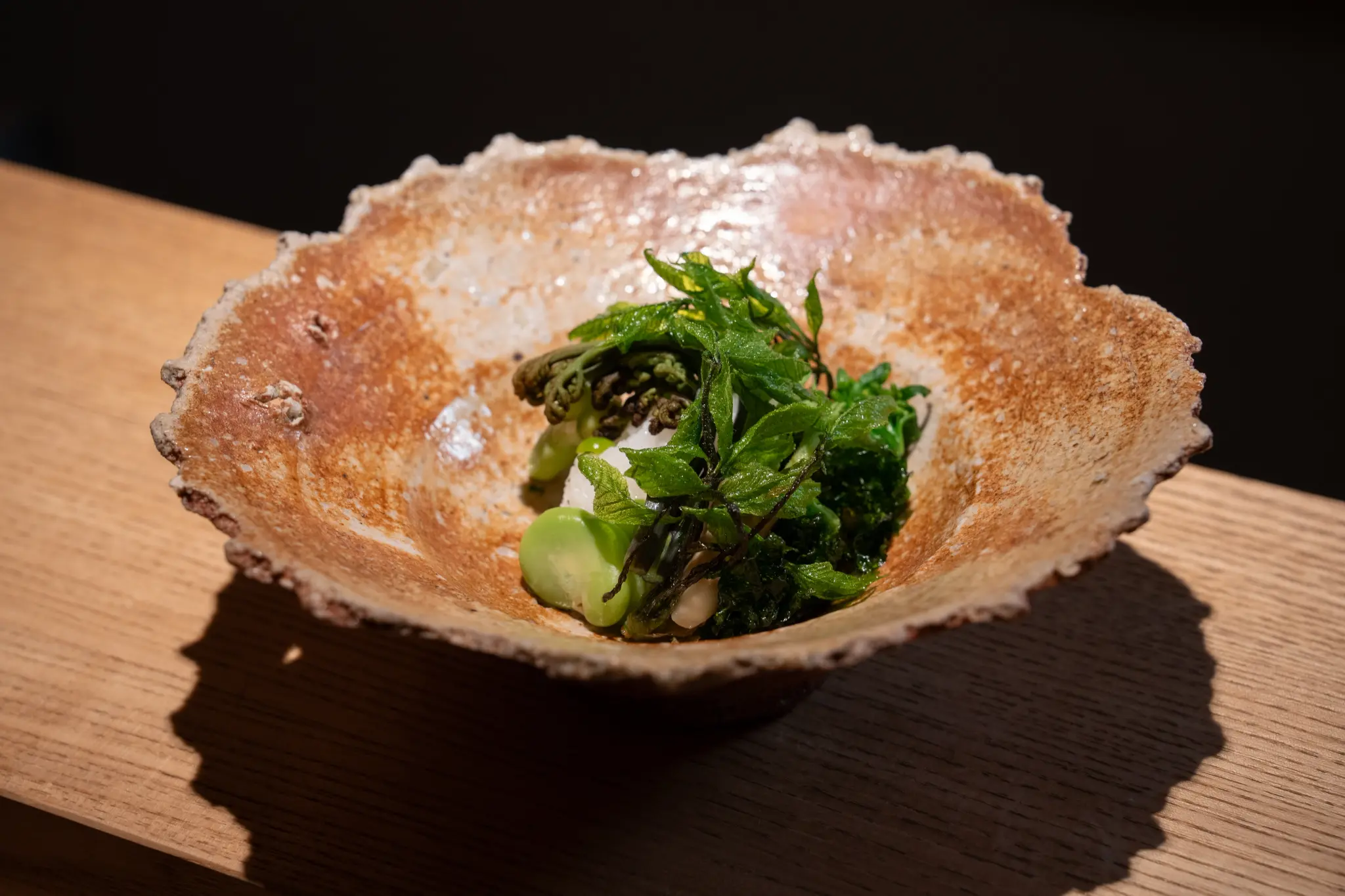
This is simply my personal philosophy, but at the risk of being misunderstood, I don’t really think of cooking at 【Ugai】 as a “job.” Of course, our guests pay for the experience, and I never take my responsibilities as a chef lightly. But fundamentally, I’m not driven by a sense of obligation. I became a chef because cooking is what I genuinely want to do.
That’s why I don’t start by asking whether something will be popular or widely accepted. First and foremost, I want to create dishes that I myself find delicious and exciting. If there are people who connect with that and enjoy what we create, I’m grateful for it.
I don’t want my cooking to be dictated by majority opinion or shaped by how others evaluate it. That’s why I choose to pursue what I truly want to express. And if the result doesn’t align with every guest’s preferences, I believe that is simply part of the process.
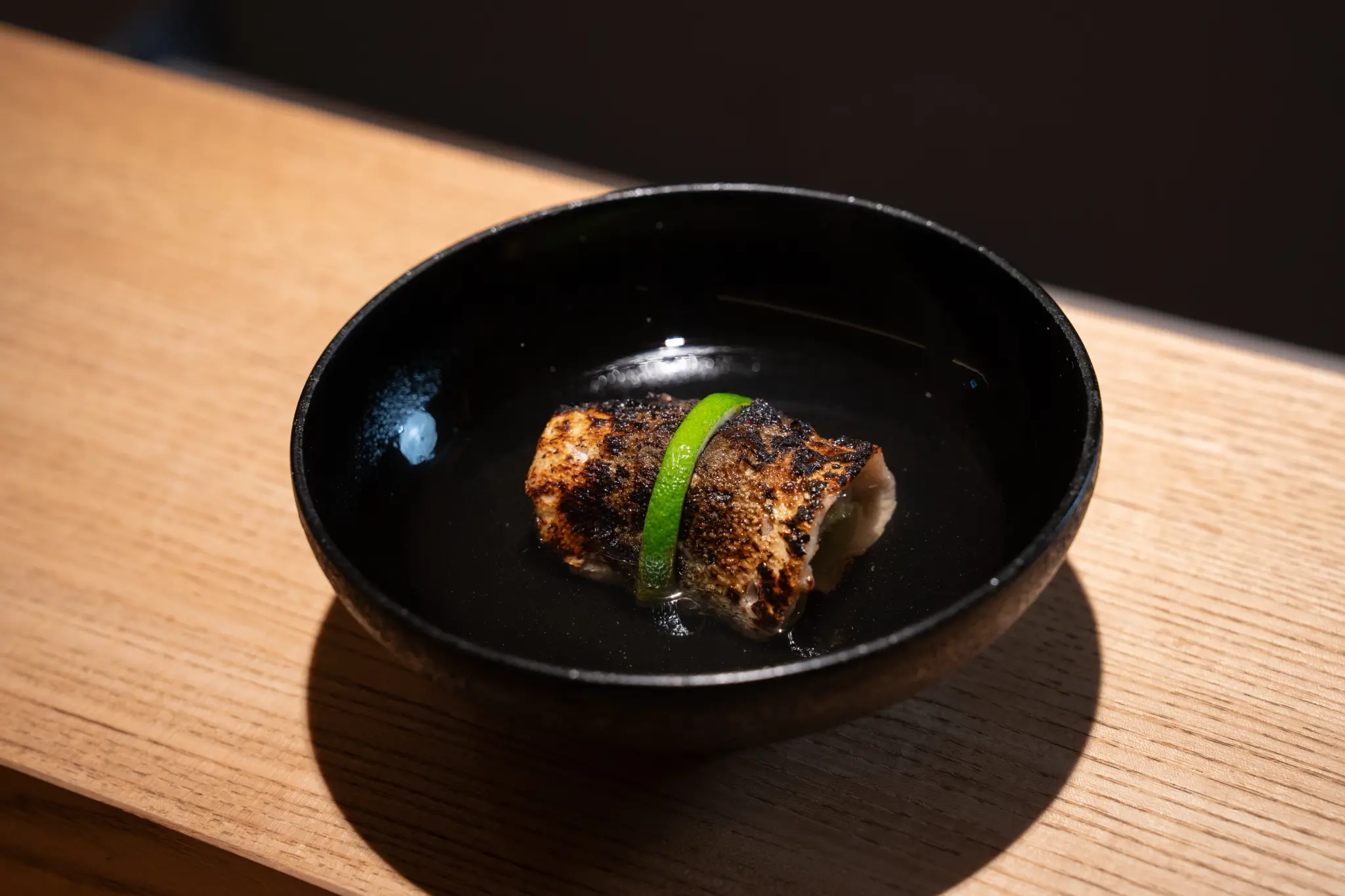
— Dishes such as “Nodoguro Yūan-yaki” and “Grilled Eggplant Ice Cream” are quite distinctive. How do you come up with ideas for creations like these?
Both our Nodoguro Yūan-yaki and Grilled Eggplant Ice Cream were signature dishes that we had served continuously since the restaurant first opened. However, we actually discontinued both of them this year, and have moved away from having any fixed signature dishes at all. That was a deliberate decision on our part. I felt that, as relatively young chefs, defining certain dishes as our specialties could limit our own opportunities for growth.
Of course, continuously refining a signature dish is one valid approach. But if we don't continue expanding the scope of our cuisine, we may attract attention for a time, only to eventually be surpassed. That's why we chose to let go of our specialties and continue challenging ourselves in new ways.
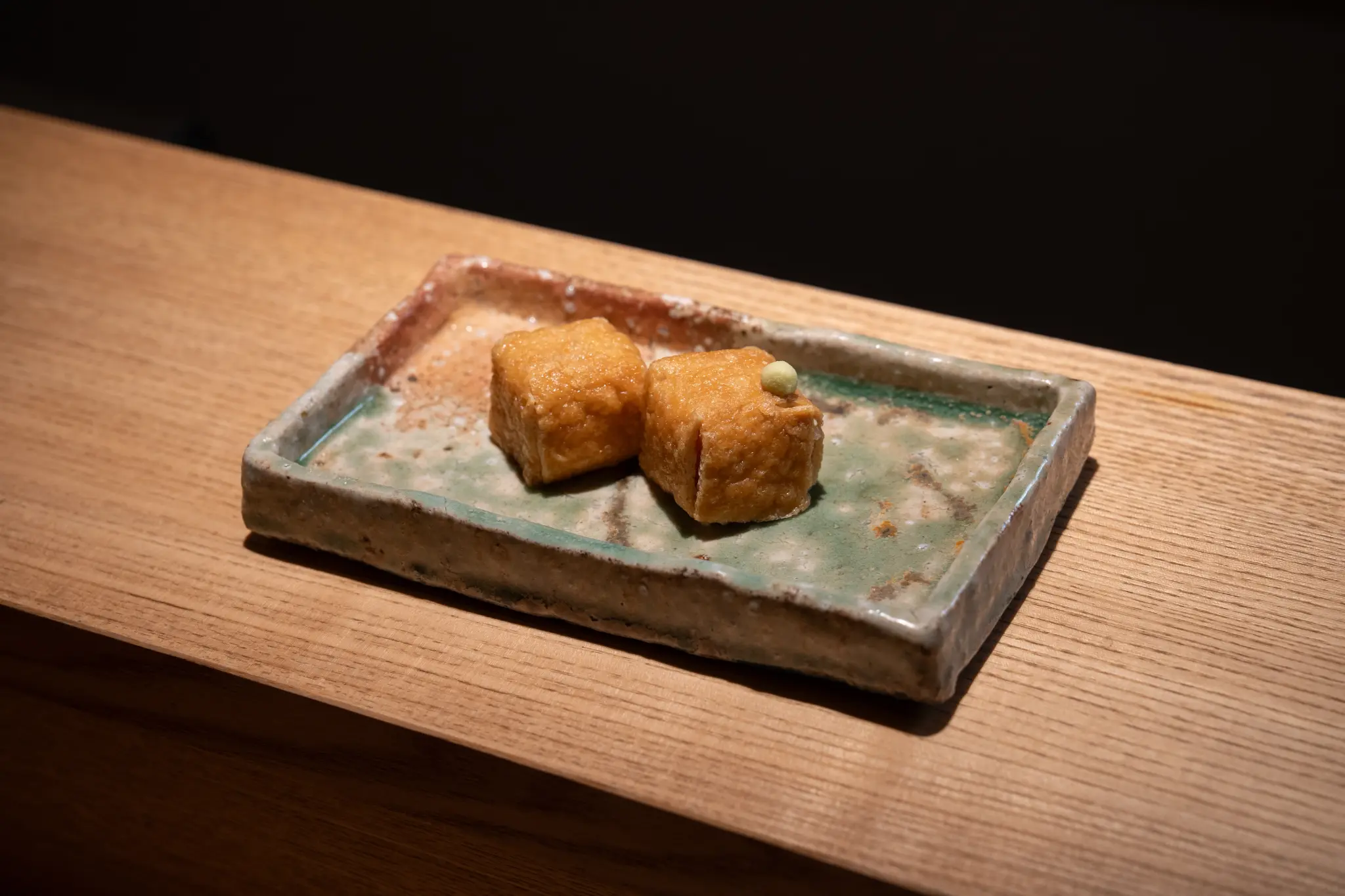
What I keep in mind when creating dishes is that I never set out to make something unusual for the sake of being unusual. The inari we served today is a good example. At the moment, we are exploring a series of dishes centered around rice as a theme, using it as a foundation for new culinary ideas and experimentation.
This month, I created a kiritanpo dish using mehikari fish. As I was looking at the fish, it suddenly occurred to me that its shape resembled kiritanpo. To be honest, I’m not particularly fond of kiritanpo myself, which is exactly why I wondered whether I could create a version that I would truly enjoy by using mehikari.
Many of my ideas begin with thoughts such as, “If it were me, I’d do it this way,” or “Maybe this could make it even more delicious.” From there, I experiment constantly, searching for ways to bring those ideas to life without straying from the essence of Japanese cuisine. I want to express, through my own sensibilities, not only the inherent appeal of an ingredient or regional dish, but also another side of it—something that makes people think, “I never knew it could be expressed this way.” Continuing to develop that expressive ability is something I value deeply as a chef.
— Is there anything you particularly value when choosing ingredients?
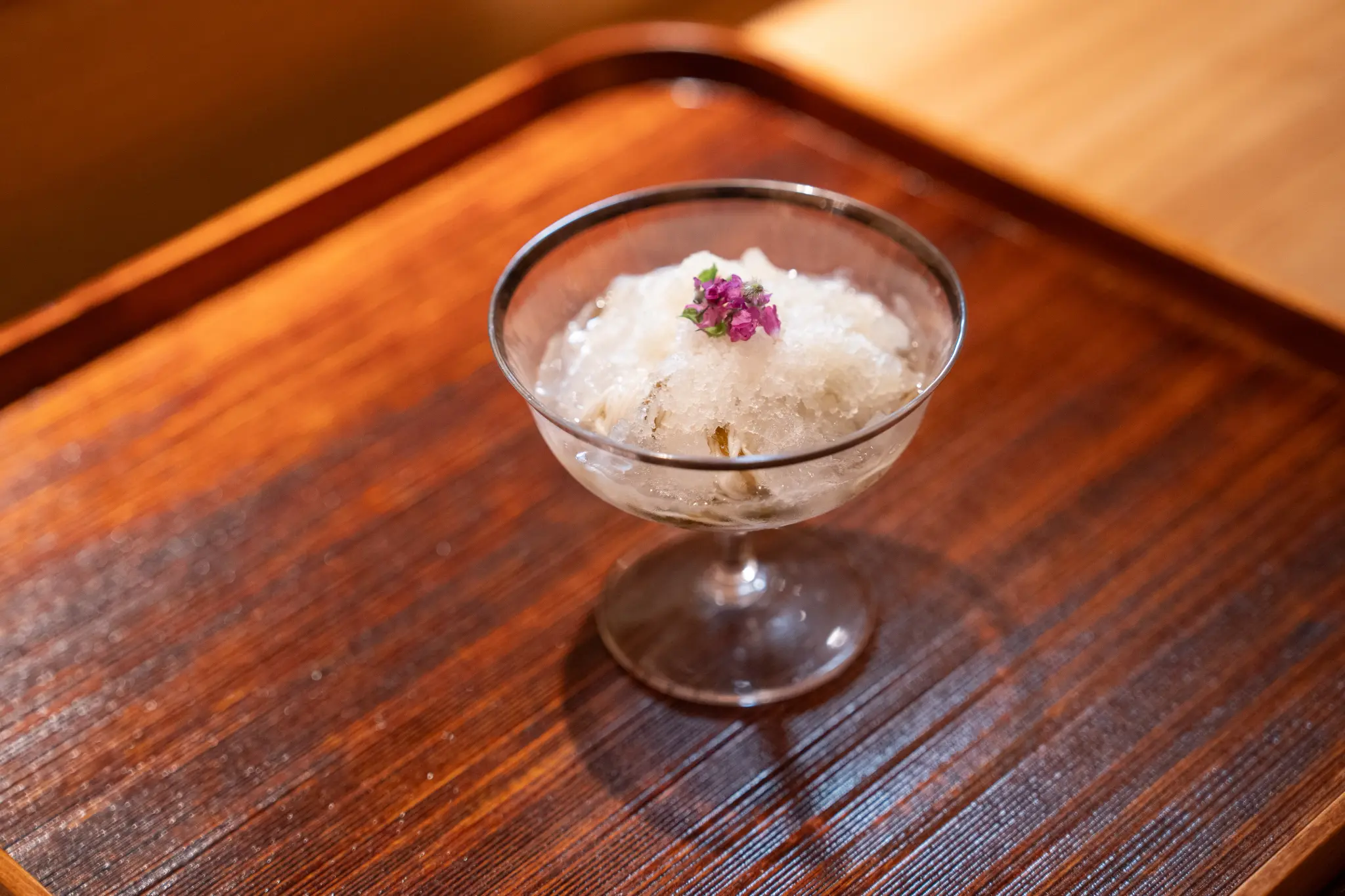
I choose things that simply look delicious to me, regardless of brand, and I would never use an ingredient just because it’s trendy or getting attention. It’s not that I’m prejudiced against such things, but I have no intention of deliberately gathering famous ingredients. I use what I’ve tasted myself and genuinely find delicious.
Unexpected Encounters Shape the Future
— What led you to start growing your own rice in Gotemba?
I've always loved cars and motorcycles, and during the final driving test at a driving school, I happened to meet someone who worked as a racing engine mechanic and was considering becoming a rice farmer. At the time, I was still in training as a chef, but I remember saying to him, “Someday, when I have my own restaurant, I want to grow my own rice. Let's do it together.” That conversation became the starting point of everything. We've now known each other for about seven years.
— What an incredible encounter.
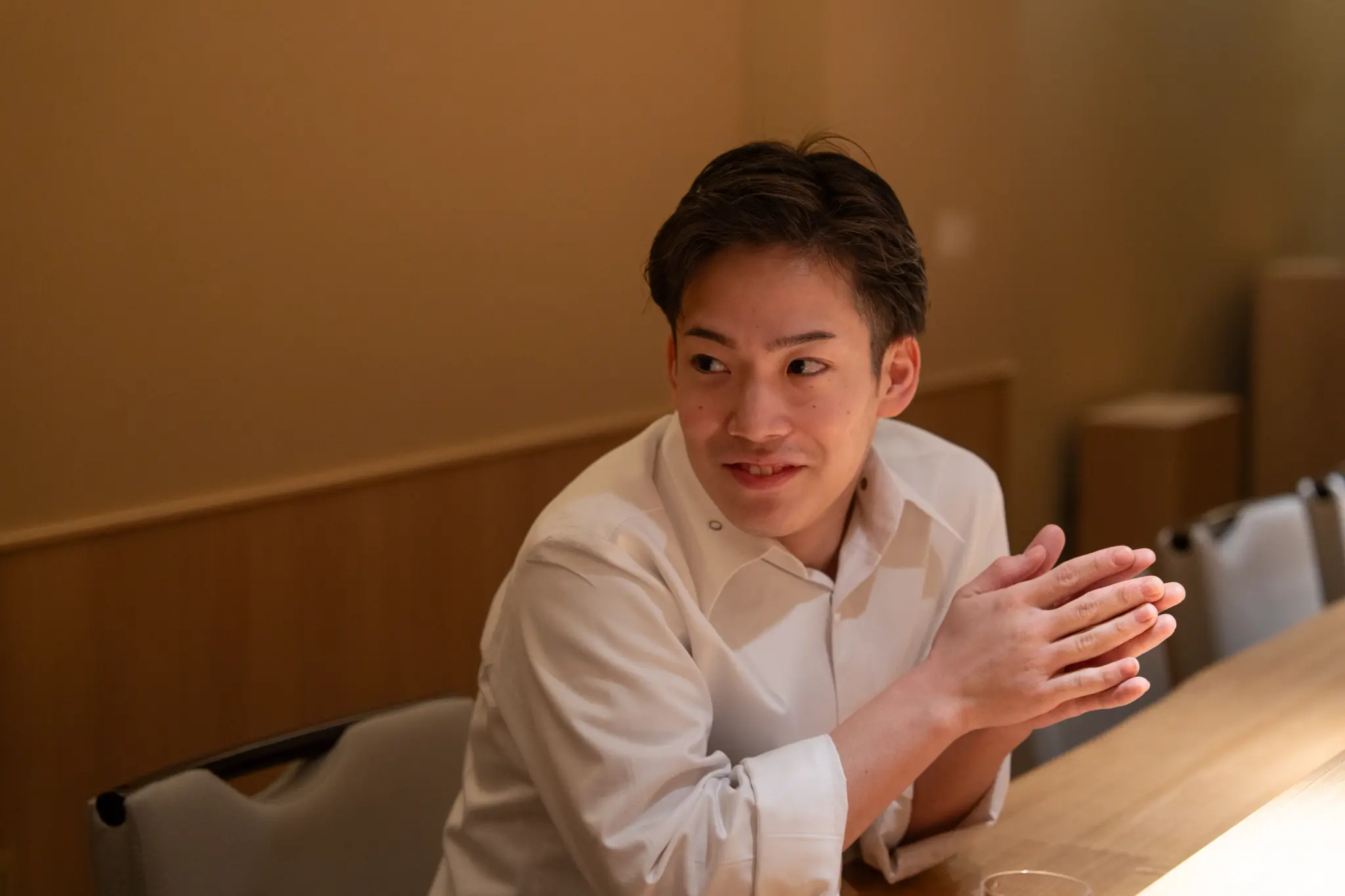
It really was. He’s an incredibly inspiring person. When I asked him why he wanted to become a rice farmer, he told me, “I want future generations to be able to enjoy the natural beauty of Mount Fuji and the stunning scenery seen from the rice fields of Gotemba. That’s why I want to learn how to grow rice myself and help protect this environment.” I was deeply moved by the passion behind his words. Seeing him actually achieve the goals he spoke about back then is something I truly admire, and I have tremendous respect for him.
Valuing Authenticity and Mutual Respect Across Generations
— When creating the atmosphere of the restaurant and welcoming guests, is there anything you particularly keep in mind?
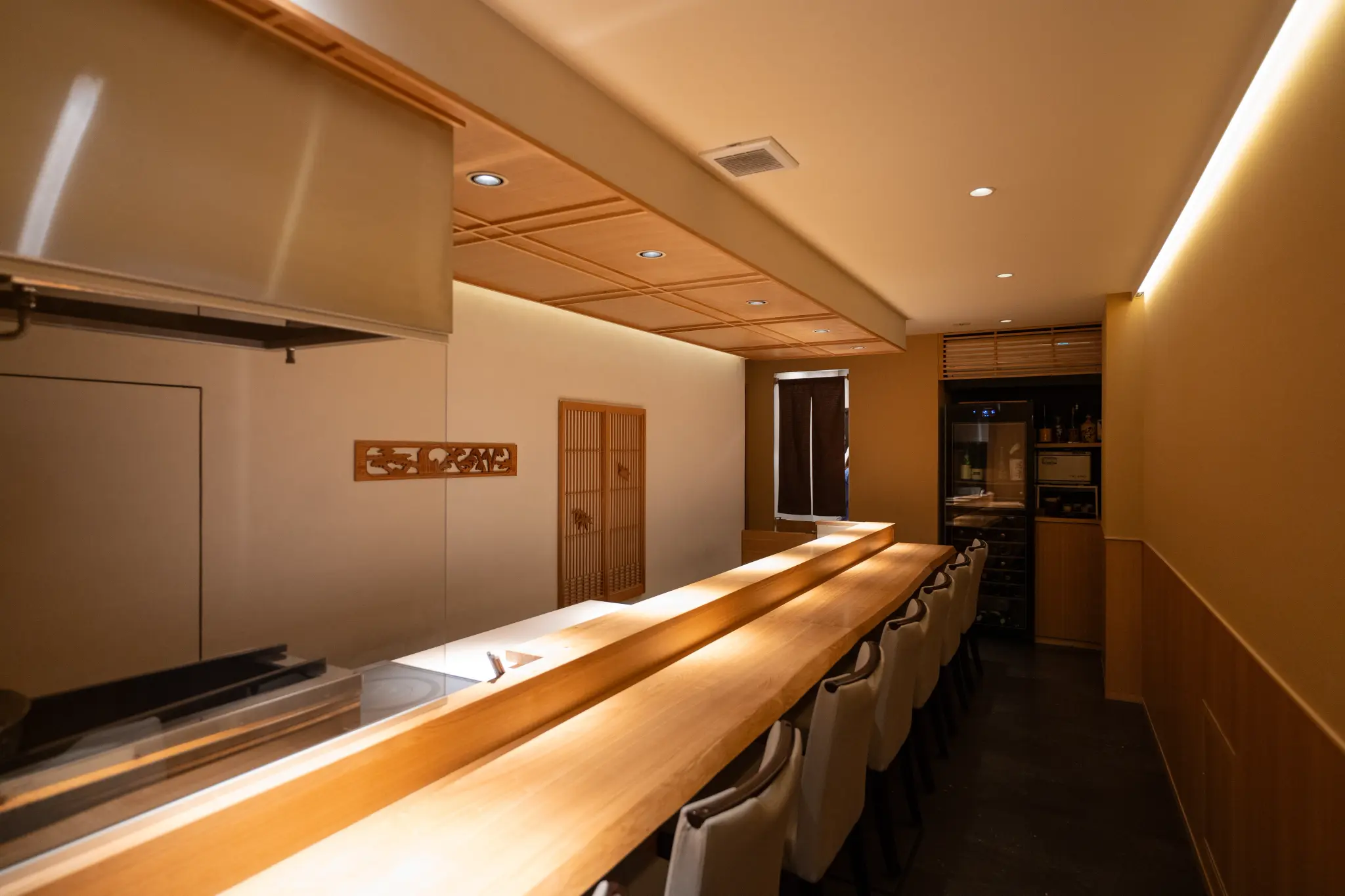
Of course, we always strive to improve the overall quality of our hospitality. But what my okami and I talk about most often is the importance of not putting on airs and simply providing service that feels genuine to who we are at this stage of our lives. That doesn’t mean lowering our standards in any way. Rather than offering overly formal service, we want to create a place where guests can relax, enjoy themselves, and feel comfortable in a warm and welcoming atmosphere. That's why we place great importance on being natural and not pretending to be something we're not.
This also ties into the philosophy of work I mentioned earlier. Because we genuinely love what we do, we want our hospitality to be driven by sincere enthusiasm rather than obligation. While consistency across the team is important, we also try not to suppress each individual's personality. We want everyone to share the same values while still expressing themselves naturally.
We welcome guests from a wide range of generations, but what I've come to realize is that age itself doesn't matter very much. It comes down to personality and temperament. In every generation, there are people who enjoy lively conversation and people who prefer something quieter.
That's why I believe compatibility is far more important than age. There are certainly people of all generations for whom 【Ugai】 may not be the right fit, just as there are many older guests who have become great supporters of ours despite the age difference. When the chemistry isn't there, I don't think there's any value in forcing it from either side. That's why we try to cherish authenticity and allow people to be themselves, both our guests and ourselves.
— Could you tell us about your future aspirations?
We currently have plans for events overseas, although some of them are being adjusted due to global circumstances. That said, I do hope that the name 【Ugai】 will continue to establish itself both in Japan and internationally.
On a more personal level, I want to continue growing while staying true to the lesson my father taught me—to never become complacent or overconfident, while always maintaining genuine confidence in myself. My goal is to become a chef who represents my generation.
In every field, there are individuals who come to define their era. Even though I’m still in my twenties, I hope that as I move into my thirties and forties, 【Ugai】 will be regarded as one of those names that people naturally associate with the generation. That's the kind of presence I aspire to become.
— Lastly, what does “delicious” mean to you, Mr. Fujii?
That’s a very fundamental question. If I had to say, I don’t think it’s something that can really be defined. Just like the “feeling” I mentioned earlier, it’s different for each person, and that’s exactly why I want to do my best to help everyone find their own idea of “delicious.” It’s the lifelong theme of my work as a chef.
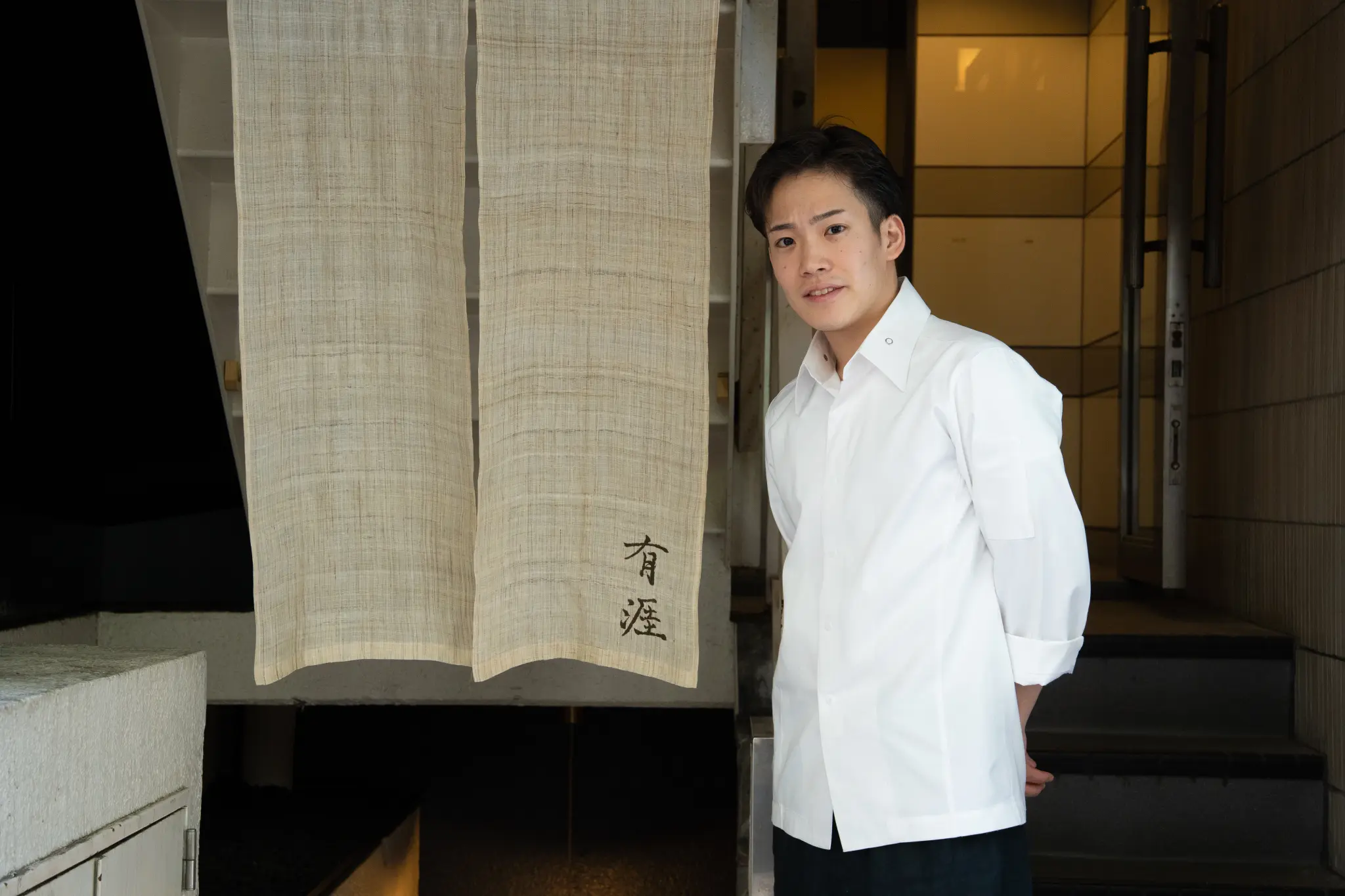
Since first embarking on the path of a chef, Ryogo Fujii has remained true to his own sensibilities, never allowing himself to be swayed by the expectations or opinions of others. Driven by a determination to keep evolving, he even chose to let go of the restaurant’s signature dishes, embracing continuous challenge over familiarity. His belief in cherishing all things that are finite—and in recognizing that even human connections are not everlasting—is embodied in the name 【Ugai】 itself. Ingredients, encounters, and time: each is precious because it is limited. By honoring each of these elements and infusing every dish with his own philosophy, Fujii continues to shape a uniquely personal expression of Japanese cuisine. What new horizons his cooking will reveal in the years ahead remains to be seen, but one thing is certain: his pursuit is far from over.
Interviews & Text / AutoReserve Magazine Editorial Team
Photography / Shoichi Baba
Restaurant Information
- AutoReserve Magazine
- Japan’s world-renowned flagship restaurant
- 【Ugai】 Ryogo Fujii’s Unwavering Philosophy: Embracing the Finite and Pioneering Japanese Cuisine Through Sensibility